"For it is by grace you have been saved, through
faith—and this not from yourselves, it is the gift of God—not by works, so that no one can boast"
Ephesians 2:8,9
"It does not, therefore, depend on man's desire or effort, but on God's mercy" Romans: 9:16
|
Index and Summary of this Page:
Introduction
God's Universal Call to Believe
God is clear in His Word about " believing" by " faith", the Gospel of salvation,
whereby Jesus Christ offered Himself as the only possible substitutionary atonement on behalf of fallen mankind's redemption. The Scriptures
are also clear about Christ's suffering, death, burial, and resurrection in redeeming those, who by faith, willingly receive Jesus Christ
as their Lord and Savior.
Scripture tells us over and over that faith in Jesus Christ alone is the requirement for receiving salvation. It would seem that anyone
who has ears to hear and a mind to comprehend, should understand this simple request from God—believe in Jesus Christ and you will
be saved! Simple right? Then why do so many struggle with this simple request? Why do so many carry on in their unbelief as if there
is no God at all? And why do those who do claim belief in God, not necessarily put their faith in the person of Jesus Christ? There are
many explanations out there for this, but it's evident that the primarily reason involves man's inherent stubbornness.
Many believe that there are multiple paths available, be it through Jesus, Mohammad, Confucius, Gandhi, or whoever, sufficient to satisfy
God's requirements for salvation. But this is certainly NOT what Jesus taught in the scriptures. Jesus was quite clear about His being
the way and the truth, and there being no other name under heaven by which men can be saved! This is because God has sent no one else
for this exclusive task, if the Judeo-Christian scriptures (The Bible) can be trusted. ( See
an excellent apologetic by Dr. Jason Lisle titled: "How Do We Know that the Bible is True?) According to scriptures, Jesus is
the ONLY one qualified to be the perfect sacrificial "Lamb of God" because He is God; God the Son, but no less human either.
He can be the ONLY mediator between man and God because He IS the ONLY mediator between man and God. Being fully God and fully man, Jesus
is the perfect reconciling agent between God and man. God burst into our world in the person of Jesus Christ specifically to redeem the
lost sheep that God the Father has given to Him. We are His sheep and belong to no one else!
John 14:6 (NIV)
" Jesus answered, 'I am the way and the truth and the life. No one
comes to the Father except through me.'"
Acts 4:12 (NIV)
" Salvation is found in no one else, for there is no other name under heaven given to men by which we must
be saved."
1 Timothy 2:5 (NIV)
" For there is one God and one mediator between God and mankind, the man Christ Jesus."
So how is man's stubbornness or unbelief in this overcome? What must happen for a man to change his mind regarding the person of Jesus?
What do the Scriptures teach us about this problem? I will explore all of these important questions.
 Back
to Top Back
to Top
What is Faith?
My Early and Faulty Reasoning about Faith - What It's Not
When I was a freshman in high school, I remember my sociology teacher asking the class "why do we believe?". No one uttered
a word for a few minutes because of the risk of saying something really embarrassing. I guess I was the brave one, because I raised my
hand up to offer an answer. "Yes Mr. Anning, do you know?" the teacher asked. I answered by saying: "Because it makes
us feel secure?". The teacher's eyes sprang open. He smiled, looked at me, and said: "That's beautiful!". The class responded
in Wow's. I guess I told him what he wanted to hear, but now regret the answer that I gave that day. I did not understand faith well
enough at that time to realize that true faith transcends even my personal need to feel secure and my inability to develop faith all
on my own without something cogent to base it on.
So, biblical faith (or any other kind for that matter) is not a crutch used to make us feel secure about matters that we are uncertain
or unsure about... actually, it is much more and quite the opposite!
What It Is
Faith is defined by God's Word in Hebrews 11:1 as follows:
(Hebrews 11:1)
"Now faith is being sure of what we hope for and certain of what we do not see."
Well, it's clear already that my high school version of faith failed the Hebrews 11:1 test of faith. I was NOT sure of the things I hoped
for, and employed hope to substantiate my faith instead of employing faith to substantiate my hope. Faith is " being sure of
our hope", not " hoping that our faith is sure".
I also failed the second criteria of Hebrews 11:1 in my shallow reasoning, by only allowing that which was seen and experienced by me,
to validate my faith. According to Hebrews 11:1, faith is "being certain of what I do not see", not "in what I have seen".
Faith is powerful, if it is true faith from God, and not just a crutch that we use to dismiss things that we cannot understand. Faith
involves being sure, not unsure. Faith is being certain, not uncertain.
Faith Is Not Blind
The word faith is often misrepresented as meaning belief in something for no reason, or belief in something with no evidence to substantiate
it. Even Mark Twain has been quoted as saying that " Faith is believing what you know ain't so". I profoundly disagree
with this. Although it may seem that some practice faith in things for no apparent reasons, all of us have reasons to put our faith in
things, despite whether they are legitimate reasons or not. There is a reason and a rationale for everything that we believe to be true
and anything that we put our faith in.
In order for anyone to have faith in something, they must believe, at least to some extent, that it is possible to begin with. The assumption
held, for faith to be possible, is that a reasonable possibility exists for something to be true. If something is understood as not possible
or impossible to be true, then we will simply have no faith in it. This is perfectly reasonable isn't it?
I believe, by faith, that man has visited the moon. Even though I did not witness the event first hand (other than on live television,
which could have been staged), I have good reason, because of the available technology that I know existed, to believe we were not deceived
about the lunar landings. I did not experience or witness first hand World War I or World War II either, but there is enough evidence
and documentation to convince me that they did indeed occur. And even though I cannot see, feel, or hold gravity or magnetic forces in
my hand, by the evidence through effects and observation, I have no problem believing by faith that they exist.
The point here is that faith, in anything, will always be exercised, if there is sufficient rationale for doing so, and never for no
reason at all. Faith is not blind and is always based on something that we at least reasoned to be true.
So how can an unregenerate " natural man", having no connection with God and with no spiritual awareness, exercise
faith in something or someone whom they cannot see, feel, experience or relate with, especially if they do not believe it to be true
in the first place? How can faith be exercised in any aspect of a spiritual realm that someone is not even aware of? They simply have
no rationale to support such a faith, nor should they!
Those who do exercise spiritual faith in Christ, cannot see God, nor have they ever personally met Jesus Christ in the flesh either,
but they know rationally that God exists (see the Origins page) and that His Son Jesus Christ is
real, both historically and experientially. They have an overwhelming rationale that supports their faith through the knowledge and reality
of Christ's presence in their lives — But why? Where did this new knowledge and subsequent understanding come from? —
This is what I will attempt to explore here.
A Misconception: — Knowledge of Truth Destroys Faith
There is something about the " faith" that God gives us, that allows us to " know" or be "certain"
that He is real, and that His salvation plan for us is real, and that true forgiveness is real. Knowledge of truth does not destroy faith,
but rather compliments it! I think that when God gives us faith, He simultaneously gives us the required knowledge and wisdom
needed for sustaining our faith. It's a package deal.
I say this because prior to my conversion, I did not " know" God in any real way nor understand what Christ did for
me. After my conversion, I did know God in a new way with an understanding of exactly what Christ accomplished on the cross
for my salvation. So, I went from NOT KNOWING prior to conversion, to KNOWING after my conversion. The result was a
faith that is unshakable through new comprehendible knowledge that I did not posses or understand before!
It is a misconception to believe that knowing something to be true somehow destroys faith. Someone will argue that " if
we know something to be true, then we no longer need faith to believe it is true". This idea stems from thinking that " Knowing
and " Believing" are mutually exclusive in nature. I disagree! ... " Knowing" and " Believing"
(faith) are relatives!
If I " Know" something to be true, then obviously, I must " believe" it (by faith) to be
true, otherwise, what good is the knowledge? I cannot and will not have faith in something that I know NOT to be true!
We tend to think that if we know something to be true, then faith is no longer necessary, since faith is only
exercised in that which we do not or can not know is true. But if we know or even suspect something to not be true,
isn't it harder to put our faith in that? It sure is for me anyway. I exercise faith in what I consider to be true. Why would
anyone want to exercise faith in something that they know not to be true? They can't!—But those whom God has revealed
Himself to, know Him and have good reason to have faith in Him because of their new understanding ( knowledge)
of Him. God not only gives us the desire to believe, but also the necessary knowledge and subsequent understanding required to support
our faith in Him and His holy work on our behalf!
So, now that God's word has defined faith for us, and we have examined some basic rationale for having faith, let's now consider why
some have this necessary rational through new-found knowledge and understanding to support their faith in Christ... and why some, simply
do not!
Back
to Top
How Severe Was The Fall Of Man?
Opinions of just how severe the fall of man was, as a result of man's rebellion in the garden, differ drastically. Most agree that
the moral abilities of mankind after the fall are definitely a factor in his decision making process, but to what degree is debatable
and understood differently within the Christian community. Biblical interpretations, as to the severity of the fall, range from "a
mere inconvenience" to "a total disaster", concerning man's moral integrity as a result of the fall.
There are three generic categories of opinion regarding how severe the fall of man was and where man, in his default nature, stands
in regards to his spiritual state of being.
-
Pelagianism: The view that God's grace is not a necessary
requirement for salvation and that man still has enough moral capacity to secure salvation by his own merits.
-
Semi-Pelagianism: The view that God's grace is a necessary
requirement for salvation that can be attained only through man's willingness of cooperation with God through their own faith.
-
Augustinianism: The view that God's grace is a necessary
requirement for salvation that cannot be attained through man's willingness of cooperation with God through faith because man is
not capable of willing cooperation with God through faith unless man is first regenerated and changed in such a way by God as to
be capable of willing cooperation through faith.
What do the scripture say?
A quick look at a few Scriptures tells us all we need to know about the inherent condition of man after the fall...
(Genesis 8:21)
The LORD smelled the pleasing aroma and said in his heart: "Never again will I curse the ground because
of man, even though every inclination of his heart is evil from childhood. And never again will I destroy all living creatures,
as I have done.
(Psalm. 51:5)
Surely I was sinful at birth, sinful from the time my mother conceived me.
(John 8:44-46)
"You belong to your father, the devil, and you want to carry out your father's desire. He was a murderer
from the beginning, not holding to the truth, for there is no truth in him. When he lies, he speaks his native language, for he is a
liar and the father of lies. Yet because I tell the truth, you do not believe me! Can any of you prove me guilty of sin? If I am telling
the truth, why don't you believe me? He who belongs to God hears what God says. The reason you do not hear is that you do not belong
to God."
(Romans 3:11,12)
there is no one who understands, no one who seeks God. All have turned
away, they have together become worthless; there is no one who does good, not even one
(Isaiah 64:6)
All of us have become like one who is unclean, and all our righteous acts are like filthy rags; we all shrivel
up like a leaf, and like the wind our sins sweep us away
(Jeremiah 17:9)
The heart is deceitful above all things and beyond cure. Who can understand it?
(Romans 8:7)
The mind governed by the flesh is hostile to God; it does not submit to God’s law, nor can it
do so.
(Romans 7:24)
What a wretched man I am! Who will rescue me from this body of death?
In this last verse (Rom 7:24), we have Paul himself admitting "What a wretched man I am" in his honest self-appraisal.
This should be enough to convince us how inherently depraved we are. Sometimes, the extreme view is the Biblical one!
Is there any other way that we can determine the severity of the fall? Is there a way we can somehow gauge our default corruptness by
human standards? I think that there is...
Have you ever studied a young, undisciplined child? At the very core of a child, is the desire to steal, cheat, covet, lie... need I
continue? These are NOT learned behaviors, they are inherited behaviors! We must constantly teach a child to not steal,
not cheat, not covet, not lie, etc... It is the very nature of a child to be selfish and self-seeking in their desires, no matter what
the cost to others or sometimes, even themselves! This is because babies, unlike what many want to believe, are NOT born innocent! Babies
are just as much the product of the fall of man as anyone else. Psalm 51:5 confirms this default condition of man. Some will argue that
children, prior to an age of accountability where conscious and deliberate sinning occurs, are absolutely innocent and sin free. However,
this is not the biblical view. According to scripture, we are "sinful at birth, sinful from the time my
mother conceived me" (Psalm 51:5). We are not sinners because we sin; we sin because we were born sinners! It's the
most natural thing in the world, and therein lies our problem! I heard a TV evangelist state that "babies are born absolutely
innocent and safe in God's grace". Really? If babies are born innocent and sin-free, why then, would a baby even need the grace
of God by means of salvation in Jesus Christ? Sinless, perfect people do not need to be saved from their sin right?
(Matthew 18:1)
"For the Son of Man has come to save that which was lost."
This brings me to a question about babies and young children that I would like to briefly touch on here. If babies are born with a sinful
nature, separated from God at birth, (which is biblical) then what happens to them when they die? Do they go to heaven or hell? The bible
really doesn't have anything to say on this directly. But there is one thing that I am confident of; if babies and small children do
get to heaven at death, it can ONLY be by God's grace, and His grace alone! Since babies are born with a sinful nature, spiritually dead
and separated from God, and since they cannot make a conscious decision to receive Christ and the forgiveness of sin, then it therefore
MUST be by God's grace alone that they can be saved at all! I would even go a step further here and point out that it is the biblical
teaching that God's grace, and His grace alone, is what saves anyone, babies and adults alike! Some may argue that babies and young children,
prior to an age of "accountability", are treated differently by God than all of the rest of humanity, because they
have not consciously sinned against God, but there simply is no biblical text to support such a claim. Their argument assumes that babies
and small children are born innocent and are not conscious or guilty of any wrong-doing and therefore get a free pass to Heaven if they
die. However, the bible teaches us that man's problem is not with any "wrong-doing", but rather "wrong-being"! All
of us, including babies and young children, are born spiritually dead and born into a sinful nature that is in opposition to God. Human
beings are not lost because they sin; they sin because they're lost! So the only hope for any of us is the unprecedented graciousness
and mercy of God! It is a free gift that has nothing whatsoever to do with man's desires or efforts!! This is a precious thing because
fallen man does not desire God, nor could he do anything about his fallen condition even if he did desire God!
(Ephesians 2:8,9)
For it is by grace you have been saved, through faith—and this not from yourselves, it is the gift of
God—not by works, so that no one can boast
(Romans 9:16)
It does not, therefore, depend on man's desire or effort, but on God's mercy
Another interesting secular example of man's moral bankruptcy is the effect of alcohol usage. Most of us would agree that alcohol influences
and changes people in ways that makes them do and say things that they would not normally do or say otherwise. I would disagree, however,
that it is only the alcohol that is at fault for this apparent behavioral change. The problem is much deeper! Alcohol does not directly
make us behave bad but it does strip away the layers of pretense and inhibitions, revealing the nasty attributes of "the flesh"
that are already present in us. When we are of sober mind, we are much better at hiding our true thoughts, feelings, and reactions to
our circumstances. Alcohol effectively removes the fear of being exposed to our carnal side and makes us bold enough to behave more honestly
(for good or for bad). As someone once said, "A drunk man says things that a sober man only thinks." I am not suggesting
here that one needs to be drunk in order to be honest... I am simply stating that when someone is drunk, honesty will prevail over deception.
The fear of being exposed to something we would normally be hiding about ourselves, is dramatically diminished. The effects of alcohol
is kindred to truth serum! I wonder how many secrets in history have been revealed by someone who drank too much? The point here is that
prior to any conversion or regeneration of our default fallen state, we all have an inherent nature that is wicked enough to constantly
conceal from people, for fear of being rejected. We are "guilty" and deep down, we know it! We all have a horrible
and corrupted dark side, which has deep generational roots in the sinful nature. It's so embarrassing, that most hide it, mask it, lie
about it, or even drink alcohol excessively and/or take drugs to subdue their negative feelings about it. It can cause depression so
great that people (even those considered healthy) continually use some form of perceptual-altering chemical to help in masking it, or
engage in some form of psychotherapy of some kind (self-administered or professionally) to convince themselves that they are okay.
Let's be honest with ourselves that apart from God, we are utterly despicable in His site... Not just off course a little, but dead,
corrupt to the core, and in serious need of life and forgiveness, not available anywhere else nor in anything else! We desperately need
the grace and power of Almighty God Himself invading our desperate and lost souls. The old sinful nature of man must be replaced with
a new holy nature, if anything good is to come from a man.
Why Are We Responsible For Adam's Sin?
At this point, it might be tempting to ask why we, thousands of generations after the fall of Adam and Eve in the garden, are held responsible
for their sin, or why their sinful action would effect us? After all, it was not us that sinned in the garden right? To
confirm this transference, or imputation of Adam's sin to the rest of us, we read in 1 Corinthians 15:21-22 that...
(1 Corinthians 15:21)
For since death came through a man (Adam), the resurrection of the dead comes also through a man (Jesus). --
(Brackets mine)
(1 Corinthians 15:22)
For as in Adam all die, so in Christ all will be made alive.
The key point of these scriptures is that in Adam, we all died spiritually. All successive generations of Adam are under the curse of
the "sinful nature". So how is it that we are bonded to, and responsible for Adam's sin? When Adam sinned in the Garden
of Eden, he was changed. He not only eventually died physically as a result, but also died spiritually. He was warned about this. Adam's
very being was changed so profoundly that even his offspring was effected. As a consequence, Adam's offspring was (and still
is) born dead spiritually and also suffers physical death as a result of the changed state of mankind, through the propagation of this
"sinful nature". Sinfulness and wickedness became the new default and natural state of man. (This is why it is so
crucial that something supernatural must happen, for a man to be restored to a pre-fallen state, where spiritual life is enjoyed once
again.)
This still doesn't answer the sticky question as to why God would hold us responsible for what Adam did. If we are really honest with
ourselves, we would have to conclude that we would have sinned also. We would not have done any better at avoiding temptation than what
Adam did. When God created Adam, God made him perfect and sinless. We must reason that when God created Adam, He did so as the perfect
representative of all mankind. So when Adam sinned, we all sinned in Adam. To proclaim that we could have done a better job than Adam,
is to proclaim that God didn't make the right choice when he created Adam to represent the human race. It's always easier to blame someone
else for our condition instead of just admitting our own inadequacies. In fact, Adam blamed Eve by telling God that "The
woman you put here with me—she gave me some fruit from the tree, and I ate it." (Gen 3:12) If anyone
had any chance not to sin in the Garden, it would have been Adam.
As depressing as this imputed sin-nature is, there is some "good news"... "For
as in Adam all die, so in Christ all will be made alive." (1 Cor 15:22) We may
complain about being dead in Adam, but God, in His mercy and grace has provided a way for us to be made alive in Christ! Just as we did
not personally choose to die in Adam (Adam represented us), neither do we personally choose to live in Christ (Christ represented us).
We choose to receive Christ only after we have be given life! But "New Life" is a gift from God! God gives life, and then life
choices, including personally receiving Christ, ensue as a result. Death is the natural result of the old natural man (Adam)—life
is the new natural result of the new Supernatural Man (Christ). In Adam we are dead, but in Christ we can live.
We are either identified with Adam and in his sin and death, or we are identified with Christ, in His holiness and life. (Consider
the references below)
(Hebrews 10:10) And by that will, we have been made holy through
the sacrifice of the body of Jesus Christ once for all.
(Rom 6:6 NAS) Knowing this, that our old self was crucified with him, that our body of sin
might be done away with, that we should no longer be slaves to sin.
(Rom 6:7 NAS) For he who died is freed from sin.
(Gal 2:20a NAS) I have been crucified with Christ; and it is no longer I who live, but Christ
lives in me;
(Rom 6:11 NAS) Even so, consider yourselves to be dead to sin, but alive to God in Christ
Jesus.
(Col 3:1 NAS) If ye then be risen with Christ, seek those things which are above, where Christ
is seated on the right hand of God.
(Col 3:3 NAS) For you have died and your life is hidden with Christ in God.
(2 Corinthians 5:17 NIV) Therefore, if anyone is in Christ, the new creation has come:
The old has gone, the new is here!
The Spirit of God strips us of our false sense of self-righteousness, by uncovering our depraved nature to the point of repentance. He
enables us to see how corrupt we really are and enables us to make an honest appraisal of ourselves to the point of begging God for mercy
and forgiveness, effectively leading us to total surrender to Jesus Christ, willingly. If someone has never experienced this, then evidently,
the Spirit of God has never visited them. Resisting the power and conversion of the Holy Spirit of God is like resisting the effects
of alcohol. It's impossible! Either the Spirit has influenced us to repentance, or He has not. The ministry of the Spirit of God is so
powerful, that when experienced, man cannot continue in his former way of life (which was actually a living death). Any man who thinks
they can resist the power of God's Spirit, must either believe they are more powerful than the Spirit, or mistaken about the Spirit's
visit.
(Romans 8:6)
The mind of sinful man is death, but the mind controlled by the Spirit is life and peace;
(Romans 8:9)
You, however, are controlled not by the sinful nature but by the Spirit, if the Spirit of God lives in you. And
if anyone does not have the Spirit of Christ, he does not belong to Christ.
(1 Corinthians 12:3)
Therefore I tell you that no one who is speaking by the Spirit of God says, "Jesus be cursed," and
no one can say, "Jesus is Lord," except by the Holy Spirit.
"The Sinful Nature" vs. "The Flesh"
This topic deserves a separate examination and is beyond the scope of this website. But since we have been spending some time here regarding
the "sinful nature", (also referred to as the "Adamic nature" or "Old nature")
I think that it is important to distinguish the difference between the sinful nature and the flesh. The biblical references
to the "sinful nature" and the "flesh" are often interpreted as being the same thing, differing
only in semantics. I believe that to use these two terms interchangeably is an error! Even though some biblical translations use the
term "flesh" as meaning "the sinful nature", these are two totally separate conditions and workings
of a man's heart. I think it is important to distinguish the two, lest we become confused about what it means to have a "new
nature" in Christ. Can a christian have both a new nature and an old nature at the same time and in the same
relationship? It doesn't seem to me that both could be true at the same time, as this would involve a contradiction in natures. Nowhere
in scriptures is the doctrine of dual-natures ever articulated. But for the sake of further investigation, let's drill down on this for
a moment.
Some biblical scholars would reason and argue that we can and indeed do have two natures simultaneously working against one another,
which, according to them, would easily explain why christians are still capable of sinning after receiving a new nature. They
reason that because man still sins after rebirth (regeneration) with a new nature, then he must, therefore, also still
have the sinful nature present in his being, as to the cause. However, we can quickly dismiss this
notion by examining the first created man, Adam. Did God create Adam with a sinful nature? Of course not! He created Adam as
a perfect man and as the perfect representative of mankind. Did Adam sin? Yes, he did! As to exactly why Adam sinned, we can't know for
sure, but Adam definitely sinned without a sinful nature! Therefore, we can safely conclude that man can and does sin without
a sinful nature present! Adam certainly did! So to conclude that the presence of a sinful nature is the only reason
as to why we continue to sin as believers is simply not a valid assumption! However, our "flesh" is more than capable
of sinning against God and does so on a regular basis. So yes, christians can and do sin, but I would reason that it is because of flesh,
not because of any lingering sinful nature.
So what then is our flesh, and how does it differ from the sinful nature? The sinful nature, when present,
is the natural propensity to distrust and disobey God. It is the natural result of the fall of man and rules a man's heart from the time
he is born. Sinning then, is the natural result of man's inherited sinful nature. It is an Adamic nature (inherited
from Adam) and is a nature that is predisposed to sin. A man with the sinful nature cannot act against that nature with
his will because he is not willing to do so. The will of a man with the sinful nature is biased toward evil and sin and is hostile
to the things of God. Such a man cannot, not sin! For the unregenerate natural man with the old sinful Adamic nature, it is the most
natural thing in this fallen world to mistrust God and to willingly sin against him. So if man is to escape the bondage of sin as a result
of his sinful nature, the sinful nature of a man must be removed and replaced with a new nature. A man's nature
is either old or new, but not both at the same time! If we have a new nature, then we cannot have an old nature. If
we have an old nature, then we cannot have a new nature. What was once "natural" before regeneration
is no longer "natural" after regeneration. And what is "natural" after regeneration was not "natural"
before regeneration. Our very nature has been replaced, not added to. We were born as natural enemies of God. We were re-born as natural
citizens of God!
(2 Corinthians 5:17)
Therefore, if anyone is in Christ, the new creation has come: The old has gone, the new is here!
Our flesh, on the other hand, can be influenced to sin. Walking after the flesh is walking after our own desires, without
considering what God wants for us. It is that part of us that acts upon old patterns of thinking and actions. However, it is possible
to not gratify the desires of the flesh because it has no permanent hold on us like the sinful nature did.
(Galatians 5:16)
So I say, walk by the Spirit, and you will not gratify the desires of the flesh...
We should no longer use the rationale that our propensity for sinning is the result of our sinful nature. Those who are born
again, regenerated with a new nature, and occupied by the indwelling Holy Spirit of God, can and do resist gratifying the desires of
the flesh by appropriating the power and work of the Holy Spirit in us. It is our new nature in Christ that enables us to walk
after the Spirit and not after our flesh. The old sinful nature no longer has us in bondage because our new holy
nature in Christ has been set free from the bondage of sin. Yes we still sin unfortunately, but we are no longer its slave! We no
longer have to sin because of an old sinful nature. We can now resist sin because of our new nature in Christ. Thank God!
(Romans 6:18)
You have been set free from sin and have become slaves to righteousness.
Back
to Top
Where Does Our Spiritual Faith In Christ Come From—Why Do We Believe?
Can the Unwilling Ever be Willing to Come to Christ?
Someone who is unwilling to do something, will not do it. Someone who is willing to do something, will do it. But someone who
is unwilling to do something, can never be willing to do it, as long as they are unwilling. They cannot be willing and unwilling at the
same time and in the same relationship! This would make no sense at all and be classified philosophically as a statement that violates
the " Law of Non-Contradiction".
However, there are things that we are willing to do that we do not desire to do, and conversely, things that we are unwilling
to do but desire to do. In other words, we can be willing but not wanting, or wanting but not willing. This can happen when
our will and our wants are at odds with each other. Our wills and our wants (desires) are two separate workings of
our soul, ( Mind, Will, & Emotions) Again, we are either willing or not willing to do or not do something... But not both
or neither at the same time.
There are four scenarios that are possible when considering our "Wills" and our "Wants":
Wanting and willing (I want to loose weight and am willing to stop eating ice cream)
Not wanting but willing (I do not want to stop eating ice cream, but am willing to do so in order to loose weight)
Wanting but not willing (I want to loose weight, but am not willing to stop eating ice cream)
Not wanting and not willing (I do not want to stop eating ice cream and am not willing to stop eating ice cream, despite
the consequences)
An unwilling mind-set must therefore be transformed, somehow, to a willing mind-set before being willing to do anything. So, the unwilling
must be made willing to come to Christ. This may seem like a play on words, but it is important to understand what the will of
man can and cannot do. Something must happen in human will itself to turn from unwillingness to willingness—but what is
it?
Do I Have to be Real Smart, or Be Better Than Others, or Something Else to Develop and Posses True Saving Faith?
This is the million dollar question and is at the heart and soul (no pun intended) of my examinations. I have contemplated this question
ever since my own faith was employed. Just how much credit can I declare (if any) regarding my faith? Why do some choose Christ by faith,
and others choose against faith in Christ? Are we totally free in our choices? What makes those who receive by faith different from those
who reject? If faith is being sure of what we hope for, where does this assurance come from? If faith is being certain of what we do
not see, where does this certainty come from? There are many questions to consider.
Faith Leads to Grace?, or Grace Leads to Faith?
Is the grace of God the result of man's faith? Or, is man's faith the result of God's grace?
If the grace of God is the result of man's faith, then doesn't man effectually save himself through his faith? In other words, God's
graciousness would be dependant on a specific correct choice made by man.
If man's faith is the result of God's grace, then doesn't God effectually save man through His grace? In other words, God's graciousness
installs the necessary faith required, despite man's inherent stubbornness!
The answers can be found in the scriptures, regarding the very nature of faith itself. It seems apparent that faith is not the result
of an individuals intellect, knowledge, good deeds, or anything else that is inherently part of man's abilities or even desires. It must
come to a man apart from himself, supernaturally. The Bible speaks of exercising faith, but does it tell us that it is up to us to develop
it, or to simply practice it? I think the latter.
If we examine a few Bible verses, we will see over and over again where our faith comes from. Consider the following Scriptures:
( All scriptural references are NIV) (Underlining mine)
(John 1:11-13)
He came to that which was His own, but His own did not receive Him. Yet to all who received Him, to those who
believed in His name, He gave the right to become children of God—children born not of natural descent, nor of human decision
or a husband's will, but born of God.
(1 Corinthians 2:14)
The man without the Spirit does not accept the things that come from the Spirit of God, for they are foolishness to him, and he cannot
understand them, because they are spiritually discerned.
(John 15:16)
you did not choose me, but I chose you and appointed you so that you might go and bear fruit—fruit
that will last—and so that whatever you ask in my name the Father will give you.
(John 6:65)
He went on to say, "This is why I told you that no one can come to Me unless
the Father has enabled him"
(John 6:37)
All that the Father gives Me will come to Me, and whoever comes to Me I will never drive away.
(Luke 10:22)
"All things have been committed to me by my Father. No one knows who the Son is except the Father, and
no one knows who the Father is except the Son and those to whom the Son chooses to reveal Him."
(Hebrews 12:2)
Let us fix our eyes on Jesus, the author and perfecter of our faith, who for the joy set before Him
endured the cross, scorning its shame, and sat down at the right hand of the throne of God.
(Ephesians 2:8,9)
For it is by grace you have been saved, through faith—and this not from yourselves, it is the gift
of God—not by works, so that no one can boast
(Romans 9:16)
It does not, therefore, depend on man's desire or effort, but on God's mercy
(Philippians 2:13)
for it is God who works in you to will and to act according to His good purpose
(Philippians 1:6)
being confident of this, that He who began a good work in you will carry it on to completion until the
day of Christ Jesus
(2 Corinthians 1:21)
Now it is God who makes both us and you stand firm in Christ. He anointed us...
(Romans 10:20)
And Isaiah boldly says, "I was found by those who did not seek Me; I revealed Myself to those who did
not ask for Me"
(Romans 12:3)
For by the grace given me I say to every one of you: Do not think of yourself more highly than you ought,
but rather think of yourself with sober judgment, in accordance with the measure of faith God has given you.
(Acts 3:16)
... It is Jesus' name and the faith that comes through Him that has given this complete healing to him, as you can all see.
(1 John 5:1)
Everyone who believes that Jesus is the Christ is born of God, and everyone who loves the Father loves His Child as well.
(Acts 13:48)
When the Gentiles heard this, they were glad and honored the Word of the Lord; and all who were appointed
for eternal life believed
(Acts 18:27)
When Apollos wanted to go to Achaia, the brothers encouraged him and wrote to the disciples there to welcome
him. On arriving, he was a great help to those who by grace had believed.
(Romans 8:33,34)
Who will bring any charge against those whom God has chosen? It is God who justifies. Who is He that
condemns? Christ Jesus, who died—more than that, who was raised to life—is at the right hand of God and is also interceding
for us
(Zephaniah 1:7)
Be silent before the Sovereign LORD, for the day of the LORD is near. The LORD has prepared a sacrifice; He has consecrated those
He has invited.
(Ephesians 1:4-6)
For He chose us in Him before the creation of the world to be holy and blameless in His sight. In love.
He predestined us to be adopted as His sons through Jesus Christ, in accordance with His pleasure and will—to the
praise of His glorious grace, which He has freely given us in the One He loves
(1 Timothy 1:14)
The grace of our Lord was poured out on me abundantly, along with the faith and love that are in Christ Jesus.
It seems apparent in all of these Scriptures who is doing the enabling regarding our faith. Faith is a gift.
Faith is given to us by God Himself, by divine invitation only. Yes, God expects all of his creatures to honor him in faith. In fact,
He demands it. But because of the total and spiritual fall of man, we became unable to exercise true faith in God on our own, now requiring
God's divine intervention for His fallen creation, for true faith to be possible at all. It is important that we keep remembering just
how severe and crippling the fall of man was. The next three verses should be a reality check for those who believe that man still has
some moral goodness, capable of saving faith apart from God's intervention:
(Titus 3:3-7)
At one time we too were foolish, disobedient, deceived and enslaved by all kinds of passions and pleasures.
We lived in malice and envy, being hated and hating one another. But when the kindness and love of God our Savior appeared, he saved
us, not because of righteous things we had done, but because of his mercy. He saved us through the washing of rebirth and renewal by
the Holy Spirit, whom he poured out on us generously through Jesus Christ our Savior, so that, having been justified by his grace,
we might become heirs having the hope of eternal life.
(Romans 3:11)
there is no one who understands, no one who seeks God
(Isaiah 64:6)
All of us have become like one who is unclean, and all our righteous acts are like filthy rags; we all shrivel
up like a leaf, and like the wind our sins sweep us away
(Romans 3:12)
All have turned away, they have together become worthless; there is no one who does good, not even one
God's external call to salvation is universal, so that all of mankind hears what is being offered. But because of the deep fall of man
through original sin, the default heart of man is like stone. Even though the offer is heard, the offer is not really understood, because
the perception of needing a savior is not understood. The external call cannot, in and of itself, soften a man's heart or provide the
ability to understand the call in any effectual way. The only call that man will ever understand is a supernatural, internal call that
can be clearly understood and executed in any effectual way. Our heart of stone must be made mutable and workable into a soft absorbing
soil first—It must be re-worked, ready and willing, before any spiritual seed can take root. I think that Jesus was explaining
this idea to His disciples using His famous parable in Mark 4:3-12:
(Mark 4:3-12)
"Listen! A farmer went out to sow his seed. As he was scattering
the seed, some fell along the path, and the birds came and ate it up. Some
fell on rocky places, where it did not have much soil. It sprang up quickly, because the soil was shallow. But
when the sun came up, the plants were scorched, and they withered because they had no root. Other
seed fell among thorns, which grew up and choked the plants, so that they did not bear grain. Still
other seed fell on good soil. It came up, grew and produced a crop, multiplying thirty, sixty, or even a hundred times."
Then Jesus said, "He who has ears to hear, let him hear."
When he was alone, the Twelve and the others around him asked him about the parables. He
told them, "The secret of the kingdom of God has been given to you. But to those on the outside everything
is said in parables so that, 'they may be ever seeing but never perceiving, and ever hearing but
never understanding; otherwise they might turn and be forgiven!'"
I find it interesting that in this parable, that the ONLY seed that takes root and produces, is the seed that falls on "good
soil". So what is it that makes soil good enough to receive seed, and produce? In the natural world, soil must be prepared
and worked in order to receive seed and produce a crop. Likewise, a man's heart must be prepared and worked in order to receive Spiritual
seed from Heaven, if a crop is to be successful at all. So, just because seed is sown everywhere on earth, does not mean that it will
take root everywhere on earth.
Just because God demands that we all trust Him by faith, does not mean that we are able to. It is not wrong or inconsistent for God to
demand of us, things we are incapable of. His standard is high and righteous. We fall well short of it. But this is still no reason for
God to demand less or to compromise His holy standards just because of our shortcomings. The law of God demanded perfection
even though it could only frustrate us by revealing our imperfection. God knew when he gave Moses the law that His people could not keep
it. In the same way, He demands that all believe in the One whom He sent for the redemption of man, even though He knows that men cannot
grasp it unless He reveals it in a special way.
(Ezekiel 36:26)
I will give you a new heart and put a new spirit in you; I will remove from you
your heart of stone and give you a heart of flesh.
So God, in His mercy and grace, has restored and enabled some to exercise a measure of faith that He has freely lavished upon them, undeservingly
and supernaturally. Just as a farmer prepares the soil to accept seed and produce a crop, God has prepared some men's hearts to receive
the Spiritual seed that He has planted in order to produce His Spiritual crop. It is quite clear to me that faith itself is a heavenly
gift from Almighty God. We can not experience it unless we are given it. And when our faith is from God and genuine, we indeed will "be
sure of what we hope for and certain of what we do not see".
Back
to Top
Is Anyone Capable of Responding, by Faith, to God's External Call of Salvation?
To Doubt is Earthly and Natural — To Believe is Heavenly and Supernatural
It has been argued by many well-meaning Christians that everyone has what it takes to understand their spiritual dilemma, and without
any interference from God (because this would be deemed as a " violation of free will"), is capable of responding in
faith in order to receive salvation. I would like to challenge this thinking and respond by declaring that no one, in their natural condition,
is capable of responding, by faith, to God's external call of salvation! Romans 3:11 seems to be very clear about this where
it states: " there is no one who understands, no one who seeks God". If no one seeks God,
then no one will respond to any external call by God. Simply hearing the Gospel of Salvation is not sufficient to convert or
convince anyone of their need unless God reveals it in a supernatural way. And, even when our moral dilemma is truly understood, by nature,
we are powerless to change what is natural about us, even though we may temporarily change our actions to satisfy the status quo. The
unregenerate man indulges the sinful nature in every way imaginable, while convincing everyone else (and sometimes even themselves) that
they have morally integrity.
I am not suggesting here that the Gospel is ineffective, but rather that the Gospel is effective ONLY when revealed by the Spirit of
God internally and personally. Yes, the Gospel must be shared in order to be heard. But it will never be understood unless God cements
it into our heart. When the Spirit reveals a man's needs, He, at some point, also reveals the Gospel to him, either directly or by proxy
through someone who is teaching it. And when He reveals the Gospel, He gives the necessary power, life, and understanding to respond
to it willingly. There is no other way that a man will be saved other than God exercising His sovereign grace and power in a man.
Even though I would love to believe that God supernaturally reveals Himself to all mankind in a way that all can effectually comprehend
His Holy call and repent, it seems evident in the Scriptures that He does not. Jesus, speaking below, to His twelve disciples and others
around Him is recorded as stating the following, regarding why He spoke in parables:
(Mark 4:11,12) He told them, "The
secret of the kingdom of God has been given to you. But to those on the outside everything is said in parables so
that, 'they may be ever seeing but never perceiving, and ever hearing but never understanding; otherwise they might turn and be forgiven!'"
Some bibles may have a footnote attached at the bottom that attempts to explain away this amazing statement as only meaning that Jesus
knew that some would reject Him anyway because of the hardness of their hearts, which is really what keeps them blind and deaf. But this
explanation does not do justice to what Jesus said. He was explaining "why" He was speaking in parables. If Jesus was simply
trying to communicate the hardness of men's hearts as to why they reject His message, then why would He need to speak in parables at
all? What difference would it make? Although it is certainly true that it is the hardness of men's hearts that keeps them blind and deaf
to the Gospel message, it is equally true that special revelation is required to penetrate this darkness. A parable could only accomplish
this with those who are given the "secret of the Kingdom of God" supernaturally,
while at the same time keeping those on the "outside" in the dark. Also note that Jesus refers to the Kingdom of God as a " secret"
that has been " revealed" to the twelve and others. It is clear to me that parables were a way to actually prevent
some from turning and being forgiven. I admit that this is very hard to accept, but so is the Gospel of salvation, that billions throughout
history have rejected. The Gospel message is not a natural message. It is not logical or acceptable by human reasoning, and in fact,
quite offensive by human standards. But "God's ways are not man's ways", and human reasoning should never dictate spiritual
solutions which are God's alone to establish.
God's sovereign will and desires are holy and are His business alone. Acknowledging that God's sovereign invitation list is NOT all inclusive,
those who are not invited still receive God's holy and just judgments and consequences. Those who have been sovereignly invited have
been given a rare and special gift that even the angels in heaven marvel in amassment at. Christ's death on the cross was specifically
designed to effectually save those who are invited, despite their inherent lack of faith or any kind of worthiness. This is known as
" Limited Atonement" or " Particular Redemption" in the " T.U.L.I.P." acrostic
of the reformed doctrine of election. (More on that later) Christ's death on the cross will indeed save those who are invited, through
the effectual grace that God gives and cannot be frustrated by man's moral inabilities and shortcomings. God did not send his Son Jesus
Christ to suffer and die on the cross so that maybe some might turn and respond to this heavenly sacrifice... He sent His Son to particularly
redeem those whom God has given to Him by His soveriegn invitation so that He would loose none of whome He gave to His Son!!
God is certainly capable of forgiving and saving everyone. God does say in His word that He desires that none should perish. (2
Pet 3:9) But who was Peter writing to in this second letter? Believers! It's obvious that God will not allow any of his
elect to perish. But the hard question here is this: Why does anyone parish? If God's choices in election are ultimately sovereign over
man's choices, then why doesn't God restore all men to Himself by offering His effectual and transforming grace to all? Why doesn't He
install the measure of faith necessary for salvation in everyone? To be honest, I do not know. God has his reasons, but I do not believe
that we should ever question why God does or doesn't do anything.
This incredible exclusion can be observed again in John 12:37-40 quoting Isaiah:
(John 12:37-40)
Even after Jesus had done all these miraculous signs in their presence, they still would not believe in Him.
This was to fulfill the word of Isaiah the prophet: "Lord, who has believed our message and to whom has
the arm of the Lord been revealed?" For this reason they could not believe, because, as Isaiah
says elsewhere: "He has blinded their eyes and deadened their hearts, so they can neither
see with their eyes, nor understand with their hearts, nor turn—and I would heal them."
When we examine the Scriptures, we find that Christ specifically gave Himself for the Church. He gave Himself for the sheep, (not the
goats). And He prayed, not for the world, but rather for those who belonged to His Father who gave them to Him!
(Ephesians 5:25)
...just as Christ loved the church and gave Himself up for her
(John 10:15)
just as the Father knows me and I know the Father—and I lay down my life for the sheep.
(John 17:9)
I pray for them. I am not praying for the world, but for those you have given me, for they are yours.
The 3rd point of Calvinism ( Limited Atonement or Particular Redemption) was formulated from this Biblical truth.
I do not mean to sound callous or unsympathetic toward those who will be lost forever and perish, as my heart grieves thinking about
their eventual fate. But we must realize that God, in His holiness and justice, could condemn all of mankind, past, present, and future
and be totally justified in doing so. So if God, for His own good pleasure and sovereign purposes, sees to it that a remnant will be
saved and gathered unto Himself, He has every right to do that, without us questioning His motives or claiming that He is not fair. God
administers His justice to those who perish, and His non-justice to those whom He saves, by way of the cross where Jesus Himself received
the penalty for His elect. But no one ever receives injustice from God. The only hint found in Scriptures as to why God saves some and
not all, is found in Romans 9:22-24. ( See Below)
(Romans 9:22-24)
What if God, choosing to show His wrath and make His power known, bore with great patience the objects of His
wrath—prepared for destruction? What if He did this to make the riches of His glory known to the objects of His mercy, whom He
prepared in advance for glory— even us, whom He also called, not only from the Jews but also
from the Gentiles?
One thing is for sure; God's sovereign choice for His elect is certainly not based on the merits of men, because if it were, then no
one would be elected! None are worthy, none seek God, and none have the capacity, in their corrupt and fallen nature, to do any good.
As stated earlier, anyone who thinks that their own faith is what God looks at, to qualify them for salvation, must believe that their
faith was produced righteously apart from any gift that was received from God.
Even If man were capable of developing faith apart from God's grace, then we would have to account for this by asking why this is so.
Why would some men posses sufficient power to believe while others do not? Do some men have the upper hand in making moral decisions?
And if so, why? If God truly shows no favoritism in His election process, and if all humans are created equal in their moral insufficiencies,
then only two possibilities would exist as a result; (1) All humans would accept the gospel, or (2) All humans would reject the gospel!
However, this is not the case, as some receive and some reject the gospel. Therefore, God MUST (by necessity) show favoritism either
by direct election, or by making some humans more righteous than others so that they can respond to the gospel. So, if some men do posses
sufficient power to believe the Gospel of salvation, this could only be because God made some men more righteous than others, in their
capacity to "believe". Therefore, God would still get the credit for His election strategy in offering some a capacity
for faith that He evidently does not offer to others. No matter how we slice it, God is still at work in His sovereign election—it
is a heavenly work that is not ours to boast in, and a work that we cannot achieve by ourselves apart from God.
(1 Corinthians 1:30,31)
It is because of Him that you are in Christ Jesus, who has become for us wisdom from God—that is, our
righteousness, holiness and redemption. Therefore, as it is written: "Let him who boasts boast in the Lord."
Back
to Top
Who Gets the Credit for Your Faith or Mine?
Is Our Faith From Us or From God?
It should be obvious at this point to realize that our faith in Christ must be initiated by God Himself. Apart from God, saving faith
is not possible in fallen man, due to the inherent corrupt nature of man after the "Great Fall". And because " the
measure of faith God has given you" is enough to secure salvation, then of course it is God who should get the credit
for our faith, our good works as a result of our faith, the fruits of the Spirit, and everything else God does in and through us. " To
God Be The Glory" were certainly wise words, and we should remember to always give God the glory—for everything!
Ephesians 2:8 and 9 states the following:
For it is by grace you have been saved, through faith—and this not from yourselves,
it is the gift of God—not by works, so that no one can boast
When reading this text, we need to consider what the phrase " and this not from yourselves"
is referring to—grace, faith, or both? One interpretation is that " grace is not of yourselves". Another interpretation
could be " faith is not of yourselves". And a third interpretation could mean " both grace and faith is not
of yourselves". The way that one interprets the word " this" in Ephesians 2:8 and 9 will mean the difference
between believing that faith is of ourselves, or is not of ourselves—but rather a gift along with grace.
If we were to interpret this verse using a grammatical litmus test, then the portion of text that states " and
this not from yourselves" would be all inclusive of what proceeded it— grace and faith, since
neither grace or faith were mentioned specifically as to what was " not from of yourselves". Of course our modern-day
translations could have changed the grammatical rules that were found in the original Greek text and grammar. But I think not. It would
be perfectly consistent with other Scriptures to interpret this as meaning that grace AND faith are not of ourselves, but rather,
gifts from God.
We should note that prior to Pentecost, Jesus was always remarking to His apostles about their lack of faith. They just didn't get it.
But after Pentecost, and after the Holy Spirit occupied and empowered them, their faith was so powerful that it led them to their deaths
for the sake of preaching Jesus Christ! I know of no human attribute or mere human faith that can empower a man so boldly. Only God could
create and work a faith so great.
Back
to Top
What is the Sovereignty of God and How Sovereign is He?
What is the Sovereignty of God?
The word "Sovereign", as defined by Princeton University - A lexical database for the English language.
(adj) autonomous, independent, self-governing, sovereign (of political bodies not controlled by outside forces)
— "an autonomous judiciary"; "a sovereign state"
(adj) sovereign, supreme (greatest in status or authority or power) "a supreme tribunal"
_____________________________
The word "Sovereign" is used almost 300 times in the New International Version translation, 3 times in the
New American Standard translation, 3 times in the New King James translation, and in all cases but a few, it is used
in addressing God as "Sovereign Lord". In the NAS, KJ, and NKJ translations, the phrase
"Lord God" was often used instead of the phrase "Sovereign Lord". In some other verses, the word
"rules" was used instead of "is sovereign". (See examples below)
New King James example:
(Daniel 5:21)
Then he was driven from the sons of men, his heart was made like the beasts, and his dwelling was with the
wild donkeys. They fed him with grass like oxen, and his body was wet with the dew of heaven, till he knew that the Most High God rules
in the kingdom of men, and appoints over it whomever He chooses.
NIV example:
(Daniel 5:21)
He was driven away from people and given the mind of an animal; he lived with the wild donkeys and ate grass
like cattle; and his body was drenched with the dew of heaven, until he acknowledged that the Most High God is sovereign
over the kingdoms of men and sets over them anyone he wishes.
No matter what translation you prefer, the central idea is the same, with either the word "sovereign", "rules",
or "Lord", all having to do with an ultimate authority above all men and things.
_____________________________
How Sovereign is God? Can Anything Happen or Not Happen Without God's Permission?
We must absolutely get a handle on the character of God regarding His sovereignty. He is above all things. He is Master above and over
the universe and over everything in it created by Him. He rules, reigns, and is accountable to no one. His will is immutable and unshakable.
Everything that comes to be or happen, is by His permission, and nothing can be or happen without His permission. There is nothing or
no one that is more sovereign than God because if there were, He would not be the ruling and authoritative God indicated by the scriptures.
All that exists and all that happens or does not happen, is under God's sovereign supervision and is included in His Holy and sovereign
will, either actively or passively.
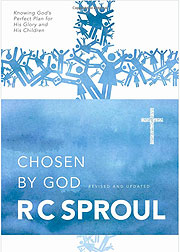
There can be only one sovereign being above all other beings, because co-sovereignty is impossible. To paraphrase Dr. R. C. Sproul (Chosen
by God), he explains it like this: Imagine an immovable object trying to co-exist with an irresistible force. The two would
be locked forever in a never ending, winless battle and neither one could be absolutely sovereign over the other if equally sovereign.
Either the object is immovable, or the force is irresistible, but both cannot co-exist at the same time and in the same relationship.
If a person goes on a rampage and kills someone, God's sovereign will is still being accomplished, either actively or passively, in that
God did not prevent it from happening, and chooses to let the murderer operate under his sinful choices and actions. In this case, His
will is being accomplished passively by allowing something to happen. God uses even our sinful choices and actions in His sovereign will.
Does God justify our sinful choices in His sovereignty? Of course not! Sin is still sin and is punishable by death under God's holy law,
unless they have died to the law and been placed under God's grace. But God's sovereign will is always accomplished and cannot be frustrated
by the actions or non-actions of man.
Obviously, God allows his creatures to sin and make a mess out of things, even though He does not approve of sin. He gives man the freedom
to sin without justifying or approving man's actions. It does seem that God keeps certain individuals on a shorter leash than what He
does with others. He gives some more freedom than others, in making a horrible mess of things. But this is all in His sovereign purpose
and plan. When God gives an unregenerate man more freedom, the corruptness of that man will flourish, because in his freedom, his corrupt
nature will be exercised more freely. (A perfect example of this was Adolf Hitler) When God keeps an unregenerate man on a short leash
and restricts his freedom, a man will have less freedom to exercise his corruptness. Either way, God's sovereignty is at work.
(Proverbs 19:21)
Many are the plans in a man's heart, but it is the Lord's purpose that prevails.
Even though evil exists, it can ONLY exist because God has given permission or allowed it to exist. If God did not give evil permission
to exist, it could not exist. If God did not give evil permission to exist, and it came into existence anyway, then evil would be more
sovereign than God. But evil cannot be more sovereign than God, or even equally sovereign with God, because the God of scriptures is
sovereign over all. Therefore, God has permitted the existence of evil. He has allowed it's very existence.
We need to be very careful here; I did not say that God created evil, nor am I claiming that He is the author of evil. God is perfect
in character and incapable of creating evil because it would be inconsistent with His holy and perfect nature. However, because evil
does exist, God has therefore, for His holy and sovereign purposes, allowed it to exist for some reason not yet known. But because God
is sovereign over all things and all circumstances, past, present and future, His sovereign plans are purposeful and perfect in all that
He allows or permits and in all that He does not allow or permit.
God's Perfect Will vs. His Permissive Will
Because God is sovereign, no one will ever go to heaven or hell unless He sovereignty permits it. His perfect will and His permissive
will are one in the same, working harmoniously, because everything that God permits is perfect in His sovereignty. Yes, even the existence
of evil and hell, are permitted parts of His perfect, holy, and sovereign purposes. Just to clarify, I am not suggesting here that God
created evil because He certainly did not. Because of His holy nature, God would never create anything that wasn't good and perfect.
However, because evil does exist, He has sovereignly allowed it to exist for His holy purposes.
Some would make a distinction between God's "perfect will" and His "permissive will". This suggests
that God had an original "Plan-A" that He preferred but failed, so He then formulated a "Plan-B" to correct or compensate
for it. Is God capable of making mistakes? Are there unforeseen contingencies that He is not aware of? As humans, with limited knowledge
and wisdom, not considering all contingencies, we often have to formulate a Plan-A, Plan-B, Plan-C, and beyond! But God is not subjected
to human shortcomings or limited knowledge and wisdom, and therefore needs only a Plan-A. His permissive will is
a part of His perfect will. His perfect will has already allowed for Satan's rebellion, man's rebellion, and all other contingencies
and possibilities that could ever happen! When God instituted His sovereign plan for His creation, He did so with complete confidence
of success. Everything that God planned will come to fruition without anything frustrating the intended end result! God instituted
only one master plan because it cannot and will not fail. What God sovereignly permits (weather perceived by us as holy or evil) is inclusive
in His perfect plan for mankind... period! We do not need to understand this, but we do need to accept it if we accept God's sovereignty!
God is Sovereign and Man's Will is Subject to God's Sovereignty
I think that it is about time that the Church embraces humility when it comes to God's sovereignty, even if it jeopardizes theologies
regarding man's so-called free-will as being supreme as to what shapes God's will for man. If God sovereignly wills that a man
should be undeservingly saved, then that man will desire God and receive His Son, through the Spirit, by the works of His grace alone.
If God wills that a man should righteously perish, then a man will perish deservingly with no valid grounds for a rebuttal or grievance.
Such a man will never desire God, unless God does a supernatural work in him.
It is God's sovereign supremacy over a man's will that ultimately saves a man! Equally true, it is God's sovereign will
that allows a man to reject Him. God sovereignty permits condemned men to naturally reject Him, but also permits condemned men to supernaturally
receive Him. Nothing can happen without God's permission... Nothing!
The sovereignty of God is not a negative attribute to be disputed but rather a positive attribute, when we consider that only by God's
sovereignty, is it possible for men to be saved at all. If man's will rules over God's will, regarding salvation, all
would perish in unbelief with no hope of rescue. Eventually, all of us will be on our knees praising our righteous and gracious God,
that He sovereignly chose to rescue anyone at all because He did not have to.
Back
to Top
Man's Free Will vs. God's Sovereignty—Who Wins?
This Question is Already Biased
We, as thinking Christians, debate this question among us often. But why do we do so? The sovereignty of God and the
free will of man are two separate issues and should not be confused with each other. To state a common cliche', " It's
like comparing apples with oranges". What we should be comparing is God's sovereignty versus man's sovereignty,
and God's will versus man's will. As examined earlier, we must concede to the reality that God is always sovereign
over man, and that God's will always trumps man's will. The only way we can connect the dots between God's sovereignty
and His will, is to acknowledge that God's will is sovereign. Therefore, the sovereignty of God always trumps the will
of man, because the will of God always trumps the will of man.
Does God Choose Someone Because They Choose Him? Or Does Someone Choose God Because He Chose Them? Or is it Both or Neither?
This debate has been going on ever since modern models of secular humanist thinking have been going on. The idea behind the " Free
Will" side of the debate is simply this:
" God would never violate the free will of a man to accomplish His purpose, because this would,
in essence, turn man into a puppet where God is controlling the strings, and reduce man to a robot like state, not capable of a true
and free expression of love and obedience toward God. Therefore, man's free will must be kept intact, and must not be influenced in any
way, as to insure that men's choices made for God are sincere and honest in desiring to love and serve God."
Is the "Free Will" of an Unregenerated Fallen Man Really Free?
This doctrine of " Free Will" is prevalent in modern thinking and in the modern church. It seems to make sense, at
least from a human perspective and is the mantra of modern evangelism. The problem with this doctrine however, is the presupposition
that the will of man is free. Nowhere in the scriptures do we find any doctrine of man's absolute moral freedom. On the contrary,
we find man's blinding bondage to sin interfering with his judgment, as well as God's sovereign will being exercised contrary
to what man would naturally desire. More often than not, we see God going about His business of exercising His sovereign will,
contrary to that of man's will. We have already seen what the Scriptures have said about man's condition, namely the fallen
and corrupt nature of man prior to any conversion. The Scriptures tell us that man does not desire or seek God ( Rom 3:11). The
will of man is in bondage to the sinful nature, and is not capable of choosing spiritual truth. In fact, we read in Scriptures
that spiritual truth and biblical doctrines are foolishness in the eyes of unregenerate men without the working of Holy Spirit. So how
can men freely choose anything that he rejects in the first place? How can he make a free choice if he himself is not free?
(1 Corinthians 1:18)
For the message of the cross is foolishness to those who are perishing, but to us who are being saved it is
the power of God.
However, in all fairness to the idea of " free will" in an unregenerated person, that person does
indeed choose to sin freely, in the sense that he chooses to do what he wants to do freely through his " natural abilities of
free choice" ... Sin! The inclination of his heart is evil in its intentions, and freely chooses to act upon that inclination
by a choice that was determined by his thinking. More often than not, a person who freely chooses to do evil does so because they do
not see or acknowledge a righteous option to not sin. In their bondage to the sinful nature, their list of choices available does not
include a righteous choice to avoid sin. They have " natural abilities" of free choice, but no " moral abilities"
of free choice. So even though they do sin freely, the choice is made out of ignorance to righteous options. A man born of the Spirit
cannot use this excuse because such a regenerated man has righteous options and choices available that an unregenerated man simply does
not have access to. Do we, as regenerated born-again christians still choose to sin freely? Of course we do, but we have spiritual options
and a power available to us that give us righteous free choices. So in summarizing this point, I would argue that a man who has been
freed from the bondage of sin has more freedom in making a righteous choice because he now has righteous options to choose from through
his " moral abilities of free choice".
(1 Corinthians 2:14)
The man without the Spirit does not accept the things that come from the Spirit of God, for they are foolishness to him, and he cannot
understand them, because they are spiritually discerned.
(Romans 8:9 NLT)
You, however, are not in the realm of the flesh but are in the realm of the Spirit, if indeed the Spirit of God lives in you. And if
anyone does not have the Spirit of Christ, they do not belong to Christ.
Our default and corrupt earthly will, here on earth, can never ultimately be exercised freely, unless something frees our will. It is
controlled and influenced by the sinful nature through the world, the flesh, and the devil. Making a free moral choice for Christ is
only possible if a man is free to do so, by the presence and enabling of the Spirit of God. But a man without the Spirit is simply not
capable of making a free moral decision for Christ and will consider anything from God " foolishness", as indicated
above in 1 Corinthians 2:14.
Rejecting Jesus Christ is Natural—Accepting Jesus Christ is Supernatural
The default will of man is anything but free and is in desperate need of reform. The only way men can choose " freely",
is if the man himself is made free by a supernatural event, removing him from the power and bondage of sin. A freeing transformation
of the very nature of man must occur before a man can be willing to come to Christ freely, or free to come to Christ willingly.
Consider the following scripture:
(John 15:16)
You did not choose me, but I chose you and appointed you so that you might go and bear fruit—fruit that
will last—and so that whatever you ask in my name the Father will give you.
Is God saying here that we had no choice at all in the salvation process? Yes, He is! However, we should not confuse this with the idea
that we didn't willingly make any choices ourselves along the way. Indeed, we did freely choose God's way of salvation, but only because
He first choose and appointed us, liberating us from our sinful nature and making us willing to freely receive Christ by supernaturally
installed faith by way of His amazing graciousness. If chosen by God, the rest follows; rebirth, holiness, desire for God, love for God,
faith, good works, etc.
(Ephesians 1:4)
For he chose us in him before the creation of the world to be holy and blameless in his sight.
Back
to Top
The Doctrine of Predestination
Is the Doctrine of Predestination Biblical?
There are those who warn against holding any view of predestination, claiming that it is not biblical to do so. But it should be pointed
out that the doctrine of predestination is not a man-made theology, but rather one that the Scriptures refer to specifically. The Bible
makes reference to the word "predestined" four times, the phrase "the elect / His elect" eleven times and the word
"election" three times in most translations. So the reason that there is a theology of predestination and election is because
the Bible specifically deals with this subject.
The real issue here is not whether or not the Bible discusses the doctrines of predestination and election, because it does, but rather,
what these terms mean. There are basically two ways that the Biblical term "predestined" is interpreted:
-
The act of God, in eternity past, choosing those for salvation based on His foreknowledge of their
willingness to receive Him and...
-
The act of God, in eternity past, choosing those for salvation based on His sovereign will alone,
enabling His elect to receive Christ through supernaturally installed faith.
Much can be said for both of these views of predestination. It is a very heavy undertaking, but one that I believe is important, if
we want to make any sense at all as to the basis for which God makes His sovereign choices concerning His elect. Either God's choice
of salvation for His elect is based on a person's choice and willingness, or it is based on God's own sovereign choice despite a person's
inherent unwillingness. Both have merit for the sake of discussion, but both cannot be true Biblically because they are both the antithesis
of each other.
I think that it is biblical to say that those whom God chooses for salvation, come willingly by faith, choosing Christ as their personal
Savior. Both God and man are in full agreement and in mutual cooperation. Those whom God does not choose for salvation, cannot come
willingly by faith, because man is morally incapable of making such a choice to begin with, due to the hardness of man's heart as a
result of his sinful and corrupt nature and unwillingness to repent because of the deep fall of man in Adam. As Jesus explained to
Nicodemus:
(John 3:6-8)
Flesh gives birth to flesh, but the Spirit gives birth to spirit. You
should not be surprised at my saying, 'You must be born again'. The wind blows wherever it pleases. You hear its sound, but you cannot
tell where it comes from or where it is going. So it is with everyone born of the Spirit."
I am persuaded by scriptures that the Biblical view of predestination is: "The act of God, in eternity past, choosing those
for salvation based on His sovereign will alone, enabling His chosen elect to receive Christ through supernaturally installed faith
through regeneration."
(John 15:16)
You did not choose me, but I chose you and appointed you so that you might go and bear fruit—fruit
that will last—and so that whatever you ask in my name the Father will give you.
(John 6:65)
He went on to say, "This is why I told you that no one can come to Me unless
the Father has enabled him"
(John 6:37)
All that the Father gives Me will come to Me, and whoever comes to Me I will never drive away.
(Luke 10:22)
"All things have been committed to me by my Father. No one knows who the Son is except the Father, and
no one knows who the Father is except the Son and those to whom the Son chooses to reveal Him."
(Hebrews 12:2)
Let us fix our eyes on Jesus, the author and perfecter of our faith, who for the joy set before Him
endured the cross, scorning its shame, and sat down at the right hand of the throne of God.
(Ephesians 2:8,9)
For it is by grace you have been saved, through faith—and this not from yourselves, it is the gift
of God—not by works, so that no one can boast
(Romans 9:16)
It does not, therefore, depend on man's desire or effort, but on God's mercy
(Philippians 2:13)
for it is God who works in you to will and to act according to His good purpose
(Philippians 1:6)
being confident of this, that He who began a good work in you will carry it on to completion until
the day of Christ Jesus
(2 Corinthians 1:21)
Now it is God who makes both us and you stand firm in Christ. He anointed us...
(Romans 10:20)
And Isaiah boldly says, "I was found by those who did not seek Me; I revealed Myself to those who
did not ask for Me"
(Romans 12:3)
For by the grace given me I say to every one of you: Do not think of yourself more highly than you
ought, but rather think of yourself with sober judgment, in accordance with the measure of faith God has given you.
(Acts 3:16)
... It is Jesus' name and the faith that comes through Him that has given this complete healing to him, as you can all see.
(1 John 5:1)
Everyone who believes that Jesus is the Christ is born of God, and everyone who loves the Father loves His Child as well.
(Acts 13:48)
When the Gentiles heard this, they were glad and honored the Word of the Lord; and all who were appointed
for eternal life believed
(Acts 18:27)
When Apollos wanted to go to Achaia, the brothers encouraged him and wrote to the disciples there to welcome
him. On arriving, he was a great help to those who by grace had believed.
(Romans 8:33,34)
Who will bring any charge against those whom God has chosen? It is God who justifies. Who is He that
condemns? Christ Jesus, who died—more than that, who was raised to life—is at the right hand of God and is also interceding
for us
(Zephaniah 1:7)
Be silent before the Sovereign LORD, for the day of the LORD is near. The LORD has prepared a sacrifice; He has consecrated those
He has invited.
(Ephesians 1:4-6)
For He chose us in Him before the creation of the world to be holy and blameless in His sight. In
love. He predestined us to be adopted as His sons through Jesus Christ, in accordance with His pleasure and will—to
the praise of His glorious grace, which He has freely given us in the One He loves
(Titus 3:3-7)
At one time we too were foolish, disobedient, deceived and enslaved by all kinds of passions and pleasures.
We lived in malice and envy, being hated and hating one another. But when the kindness and love of God our Savior appeared, he saved
us, not because of righteous things we had done, but because of his mercy. He saved us through the washing of rebirth and renewal by
the Holy Spirit, whom he poured out on us generously through Jesus Christ our Savior, so that, having been justified by his
grace, we might become heirs having the hope of eternal life.
There are numerous examples in scripture where God's holy sovereignty outweighs man's selfish ways. If God did not sovereignly predetermine
some for salvation, none would be saved! Predestination is not determined by man's will, but rather God's will. Left to himself, man
would perish in his own fallenness and inadequacies. Man cannot and will not make a righteous and free choice to receive Christ as
Savior unless a man be "born again" by the Sprit, "regenerated" to a state of spiritual life
by being indwelt by God's Holy Spirit. For all of God's predestined elect, He has given the gift of the Holy Spirit and regenerated
them so that saving faith is not only possible but eminent! Faith is fruit of the Spirit and the Spirit is given to all those whom
God has chosen to be His sovereign predestined elect. If we are exercising true saving faith in Jesus Christ, it is ONLY because we
have been chosen and predestined to do so! Otherwise, we would have NEVER freely chosen Christ.
In Ephesians 9, Paul makes a rather astonishing case for God's sovereign choice in election and why:
(Ephesians 9:10-25)
(10) Not only that, but Rebekah’s children were
conceived at the same time by our father Isaac. (11) Yet, before the twins were born or had done anything good or bad—in order
that God’s purpose in election might stand: (12) not by works but by him who calls—she was told, “The older will
serve the younger.” (13) Just as it is written: “Jacob I loved, but Esau I hated.” (14)
What then shall we say? Is God unjust? Not at all! (15) For he says to Moses, “I will have mercy on whom I have mercy, and I
will have compassion on whom I have compassion.” (16) It does not, therefore, depend on human desire or effort, but on God’s
mercy. (17) For Scripture says to Pharaoh: “I raised you up for this very purpose, that I might display my power in you and that
my name might be proclaimed in all the earth.” (18) Therefore God has mercy on whom he wants to have mercy, and he hardens whom
he wants to harden. (19) One of you will say to me: “Then why does God still blame us? For who is able to resist his will?”
(20) But who are you, a human being, to talk back to God? “Shall what is formed say to the one who formed it, ‘Why did
you make me like this?’?” (21) Does not the potter have the right to make out of the same lump of clay some pottery for
special purposes and some for common use? (22) What if God, although choosing to show his wrath and make his power known, bore with
great patience the objects of his wrath—prepared for destruction? (23) What if he did this to make the riches of his glory known
to the objects of his mercy, whom he prepared in advance for glory— (24) even us, whom he also called, not only from the Jews
but also from the Gentiles? (25) As he says in Hosea: “I will call them ‘my people’ who are not my people; and I
will call her ‘my loved one’ who is not my loved one,”
If there were ever a place in scripture where Paul could have set the record straight regarding what God's sovereign predestination
was all about, it would have been here in these passages! Notice that in verse 19, Paul knows what the logical question will be after
what he just shared: "Therefore God has mercy on whom he wants to have mercy, and he hardens whom he
wants to harden" -- "One of you will say to me: 'Then why does God still blame us?
For who is able to resist his will?'" Why would Paul pose such a hypothetical question if he were not referring to
God electing man unconditionally? If Paul was just referring to God selecting man based on future knowledge of a man's decision, then
Paul would have not raised this question at all. In fact, here, he could have clearly refuted any doctrine that God makes the sovereign
choice unconditionally... But he doesn't!! Instead, Paul makes it quite clear: "But who are you, a human
being, to talk back to God? Shall what is formed say to the one who formed it, ‘Why did you make me like this? Does not the potter
have the right to make out of the same lump of clay some pottery for special purposes and some for common use?" Paul
then concludes by explaining why God sovereignly chooses this way: "What if God, although choosing
to show his wrath and make his power known, bore with great patience the objects of his wrath—prepared for destruction? What
if he did this to make the riches of his glory known to the objects of his mercy, whom he prepared in advance for glory—even
us, whom he also called, not only from the Jews but also from the Gentiles? As he says in Hosea: 'I will call them ‘my people’
who are not my people; and I will call her ‘my loved one’ who is not my loved one,'” I believe that Paul
was being brutally honest here regarding God's right to His sovereign will and decisions regarding His predestined elect.
Back
to Top
The Doctrine of Double-Predestination
What Happens To Those Who Are Not Predestined For Salvation?
The doctrine of Double-Predestination is a very controversial subject. It is based on the premise that if God has an elect to
whom He will give passage to heaven by His sovereign choice, then the rest of mankind is either actively or passively being condemned
by His sovereign choice as well. This is not a pleasant doctrine to entertain. But just because it is difficult, or even offensive to
discuss, we should not avoid discussing it, just for the sake of making ourselves feel better. Doctrines designed to make us feel better
can be deadly, and actually make us feel worse in the long run, especially if they are heretical in nature.
Some, that are of both the " reformed" and " non-reformed" persuasion, may argue that yes, God chooses
those who are of the elect, but never chooses those who are of the non-elect. In other words, they maintain that God chooses who will
go to heaven, but never chooses who will go to hell. But this makes absolutely no sense at all. If God chooses and establishes His heavenly
elect, then He must also, by omission, have chosen those who He will not elect. By not choosing someone for salvation, He has effectually
chosen them for His righteous judgment. If God has two clay vessels to deal with, how can He choose one vessel for noble purposes, without
choosing the other for common use. This is the crux and pain of the doctrine of Double-Predestination. Remember though, God
could choose that everyone receive eternal judgment and be perfectly righteous in doing so without us accusing Him of any foul play.
The doctrine of Double-Predestination is a doctrine of God's amazing grace being applied to those who deserve condemnation,
and issuing His justice to the rest of mankind, who deserve condemnation. But no one receives any injustice.
It should be pointed out that the non-reformed view of predestination has to deal with this particular issue also,
because whether you are reformed or non-reformed in your view of predestination, God willingly
and knowingly allows the creation of those who will ultimately perish, regardless of who is doing the choosing.
Some argue that the idea of "predestined condemnation" is an idea that only Calvinists have to deal with.
But dealing with why God would allow the creation of a soul destined for eternal judgment is a universal question that weighs heavy on
all of us, despite one's personal preference of reformed or non-reformed theological persuasion. This is because even
those of the "non-reformed" persuasion must realize that even if man's fate is entirely predicated on man's choices
and not with God's, God, in his foreknowledge, still allowed them to be born and exist, knowing the ultimate fate of eternal separation
as a result of human choices that would be made. So again, whether you are reformed or non-reformed in your view of
election, God willingly and knowingly allows souls to exist who will ultimately perish.
I had a conversation with a pastor who tried to bypass this sticky issue all together by actually making the amazing declaration that
God limits His own knowledge of man's decisions regarding salvation, thereby letting Himself off the hook for having to make the decision
as to who is elected and not elected for salvation. Really? A doctrine like this has so many problems with it that would be a fools errand
to try to make any sense out of it. Any doctrine that limits or suppresses God's own self-knowlege (Omniscience) is a dangerous one!
Additionally, if God suppresses His own knowledge of man's decisions, how could He righteously judge anyone at all? Any doctrine of "limited
omniscience" is a self-contradictory doctrine and should be considered as total nonsense.
In essence, the difference with the non-reformed and reformed views of predestination is basically this; In the non-reformed
view, man's hope for salvation rests entirely in man's abilities of faith in Christ, in order to receive the benefits of God's grace
that leads to salvation; In the reformed view, man's hope for salvation rests entirely in God's grace to install the necessary
faith in Christ that leads to salvation. One system is about man's abilities of faith, the other is about God's effectual grace which
supplies even the necessary faith required. But both systems require help from God in some way. With the non-reformed view,
the salvation process is as much dependant on man's will as it is in God's grace. With the reformed view, the salvation process
is dependant exclusively in God's grace alone.
The non-reformed system will argue that salvations is achieved by the mutual cooperation of God and man, where man's faith is
the catalyst for cooperation, while the reformed system will argue that salvation is achieved by God's grace alone, where God's
grace supplies the necessary faith in man, in order for him to believe at all.
In What Sense Does God "Harden" the Hearts of Men?
The Scriptures makes several references to God "hardening" the hearts of men. This may seem, to some, like
the doctrine of either a radical God, or a radical interpretation of God. It depends on how the word "Hardening" is
understood. There are two views regarding "God's Hardening"; "Active Hardening" and "Passive Hardening".
This leads us to the theological concept known as...
"The (Equal) and (Unequal) Ultimacy Views of Double Predestination"
How's that for a title! I didn't make this up... It's out there and is important to understand when dealing with God's active and passive
will. God's will is always accomplished, and never frustrated. Nothing can frustrate the ultimate will of God. If something
or someone could frustrate the sovereign will of God, then it would have to be more sovereign than God! And nothing is more
sovereign than God!!
God's sovereign will is accomplished in two ways; "Actively" and "Passively". When God does something actively,
He is directly influencing circumstances and/or people, to accomplish His holy purpose. When God does something passively, He is indirectly
influencing circumstances (by doing nothing) to accomplish His holy purpose. Either way, He is accomplishing His holy purposes, with
or without our approval.
"The Equal Ultimacy View of Double Predestination" is the idea that (1) God actively regenerates the hearts
of men, making them willing and able to receive the Gospel that leads to salvation and (2) actively hardens the rest of men's hearts
by making them more corrupt than they already were before He hardened them, thus making it impossible for them to ever receive the Gospel
of salvation. I totally reject this doctrine and is NOT what Calvinism and Reformed Theology teaches. (This would be
considered as "Hyper-Calvinism" which is not Calvinism at all!)
"The Unequal Ultimacy View of Double Predestination" is the idea that (1) God actively regenerates the hearts
of men, making them willing and able to receive the Gospel that leads to salvation and (2) passively hardens the rest of men's hearts
by leaving them inherently corrupt in their original nature (by not influencing or regenerating them), thus making it impossible for
them to ever receive the Gospel of salvation by virtue of their own inherited stubbornness.
Calvinism and Hyper-Calvinism ... Do Not Confuse the Two ... They are NOT the Same!
The "Reformed View of Election" (Calvinism) has been grossly misunderstood by some to mean that God chooses some to
be saved who are kicking and screaming to resist Him all the way to Heaven, and that God condemns others who really want to be saved
all the way to hell. (This is a Hyper-Calvinistic view better known as "Fatalism" and is based on the Equal
Ultimacy View of Double Predestination) This is NOT the Calvinistic Reformed view of predestination and should
be rejected as Biblical heresy. Calvinism has always taught that all who come to Christ, come to Him willingly, and
all who reject Christ, reject Him willingly. No one is forced against their will to do anything. The Scriptures are
clear that all of us are inherently unwilling to receive Christ, unless God supernaturally effects a change in the will of man
from unwillingness to willingness to receive Christ as savior. This is what the Grace of God is all about, because
without God's grace, none of us would be willing to receive Christ at all.
What Ultimately Rules—God's Sovereign Will or Man's Will?
You had better hope that it is God's will that ultimately rules the affairs of men, because left to man's will, without
any supernatural influence or restoration, all men would perish in unbelief! It is amazing to me how many in the modern church believe
that man has just enough moral goodness to understand their desperate need of a Savior and enough courage and power to believe and receive
the Gospel of Jesus Christ. The Scripture tells us repeatedly that Spirit is born of Spirit—not flesh. Apart from God's supernatural
revelation of Himself, man just doesn't get it, nor will he ever fully understand his moral dilemma by himself.
Okay, so some may agree that yes, God must reveal Himself supernaturally in order for men to understand his need, and understand what
God offers. But isn't it possible for men to still reject God's offer of salvation even after it is clearly understood? Can't men resist
God's grace?
I would like to address this question with another one: Who in their right mind, knowing how corrupt and desperate they are, and knowing
what God is really offering, would want to resist? This reminds me of an interesting comparison that I once heard, where someone is offered
a free meal and is required to make a choice for one of the two plates being offered; On one plate is dog vomit—on the other is
a perfectly prepared filet mignon. Anyone who is in touch with reality at all, knowing the difference between the two, would ALWAYS choose
the Filet mignon! If they choose the dog vomit, it would indicate that either they are making their choice in total darkness with no
sense of vision, touch, taste or smell to aid them in their decision, or making their choice not knowing the difference between dog vomit
and filet mignon. Either way, a decision for the dog vomit would be one based on total ignorance. This may seem like an extreme example
to use, when comparing the desire for Jesus Christ with food, but for those who truly understand what is at stake, the choice is just
as easy and clear, when choosing between life or death, heaven or hell and God or Satan. Grace refused is grace not understood! And grace
not understood is grace not given!!
When God administers His grace to a man, He surely sees to it that the man will supernaturally understand two things; (1) How corrupt
the man is, resulting in his knowing his desperate need of a Savior, and (2) How Holy God is, and the Savior He sent, His Son Jesus Christ,
whom He has offered for the man's salvation. If someone does not understand these two critical truths, then obviously God has not, by
His grace, revealed Himself to this person. God, in His graciousness, must reveal both man's problem and His solution to man's problem,
or nothing can possibly happen in terms of a man's salvation. This is what God's grace is all about... revealing the problem and the
solution in a way that is so clearly understood, that a man would never refuse the offer.
Back
to Top
What is Grace? - Can We Resist God's Grace?
What Is God's Grace?
According to Wikipedia, the definition of "Divine Grace" is as follows:
"In Christianity, divine grace refers to the sovereign favor of God for humankind — especially in regard to salvation —
irrespective of actions ("deeds"), earned worth, or proven goodness."
"Grace is enabling power sufficient for progression. Grace divine is an indispensable gift from God for development, improvement,
and character expansion. Without God's grace, there are certain limitations, weaknesses, flaws, impurities, and faults (i.e. carnality)
humankind cannot overcome. Therefore, it is necessary to increase in God's grace for added perfection, completeness, and flawlessness."
"Put another way, humankind is unable to evolve or be saved without God's grace; it is a prerequisite to salvation. Additionally,
humans cannot exchange good deeds for it. It is a free gift from God. Thus, humankind is saved all by grace and not by some combination,
mixture, or blending of good works and divine grace. Were it achieved by works, humans could take pride in their efforts towards holiness."
The Biblical context of God's grace agrees. See the following Scriptures:
(Romans 11:5, 6)
So too, at the present time there is a remnant chosen by grace. And if by grace, then it is no longer by
works; if it were, grace would no longer be grace.
(1 Corinthians 15:10)
But by the grace of God I am what I am, and His grace to me was not without effect. No, I worked harder than
all of them—yet not I, but the grace of God that was with me.
(2 Corinthians 1:12)
Now this is our boast: Our conscience testifies that we have conducted ourselves in the world, and especially
in our relations with you, in the holiness and sincerity that are from God. We have done so not according to worldly wisdom but according
to God's grace.
(2 Corinthians 9:8)
And God is able to make all grace abound to you, so that in all things at all times, having all that you
need, you will abound in every good work.
(2 Corinthians 12:9)
But he said to me, "My grace is sufficient for you, for my power is made perfect in weakness."
Therefore I will boast all the more gladly about my weaknesses, so that Christ's power may rest on me.
(Galatians 2:21)
I do not set aside the grace of God, for if righteousness could be gained through the law, Christ died for
nothing!"
(Ephesians 2:4, 5)
But because of His great love for us, God, who is rich in mercy, made us alive with Christ even when we were
dead in transgressions—it is by grace you have been saved.
(Ephesians 4:7, 8)
But to each one of us grace has been given as Christ apportioned it. This is why it says: "When He ascended
on high, He led captives in His train and gave gifts to men."
(Titus 3:4-7)
But when the kindness and love of God our Savior appeared, he saved us, not because of righteous things we had done, but because of
his mercy. He saved us through the washing of rebirth and renewal by the Holy Spirit, whom he poured out on us generously through Jesus
Christ our Savior, so that, having been justified by his grace, we might become heirs having the hope of eternal life.
We looked at "Faith" earlier, and examined reasons for having faith. But a look at God's grace and what it means
is necessary at this point because the biblical term "Grace" seems to mean different things to different people.
There are basically two versions or interpretations in theological discussions, as to what biblical "Grace" means
and accomplishes:
-
Non-Effectual Grace
- The non-reformed view of election maintains that God's grace is the act of God, through His mercy, love,
and potential forgiveness, making it possible for man to be saved through the death, burial, and resurrection of Jesus Christ.
It maintains that God's offer of salvation itself does not guarantee anything to men, but only makes it possible, dependant on
man's willingness to believe and receive it. So man is elected ONLY if he is willing to be, and then makes the appropriate choice.
Non-Effectual grace, therefore, falls short of actually saving men and is contingent on man's faith in Christ. — God, by
His offer of grace, does not "effect" the man to be willing to receive it. Man must be willing on his own.
- Effectual Grace
- The reformed view of election maintains that God's grace is the act of God, through His mercy, love, and
forgiveness, making it a reality for man to be saved through the death, burial, and resurrection of Jesus Christ. It maintains
that God's offer of salvation does guarantee everything necessary for a man, including God overcoming man's unbelief.
Effectual Grace, therefore, when offered, always saves men by enabling man's faith in Christ. — God, by His offer of grace,
does "effect" the man to be willing to receive it. Otherwise, man would never receive it.
Is God's Grace Irresistible?
The word " Irresistible", may to some, mean not having the freedom to resist something or being forced to accept something.
In some cases, this would be an accurate definition of something irresistible. But irresistible can also mean freely
choosing something because of an overwhelming passion or desire for it. I would like to clarify what the reformed position of Irresistible
Grace is.
If someone totally and truly understands the benefits of receiving Jesus Christ, and who also truly understands the consequences of rejecting
Jesus Christ, they will always find what Jesus Christ offers as irresistible. After all, who, in their right mind, knowing how corrupt
and desperate they are, and knowing what God is really offering, would want to resist His divine grace? So, the effect of Irresistible
Grace does not mean that someone can not resist, it means that someone will not resist it, while being both free and
sincere in their choice. It is in this vain that the doctrine of Irresistible Grace has it's meaning. God's grace is irresistible
in the sense that it is too beautiful and precious to resist when truly understood.
If we could resist God's grace, then God's grace is not sufficient to overcome man's unbelief. If we could resist God's saving grace,
then we would have to believe that we are more sovereign than God, and that our unbelief trumps God's grace. If the condition
of experiencing God's grace is dependant on man's willingness to receive it, and not in God's sovereign purpose to administer it, THEN
NO ONE WOULD RECEIVE IT !! This is because in man's fallen nature, no one wants it. It is by God's grace that we even desire Him at all.
( See Romans 3:11 above)
Some believe that God's grace has nothing whatsoever to do with overcoming our unbelief. They would argue that God's grace is not effectual
in conditioning man to respond to God's salvation offer, and that men are responsible, all by themselves, to muster up enough faith required
to accept God's gracious call to salvation. I do not find any scriptural support for this, and in fact, believe that the Scriptures communicates
the opposite. ( See Scripture references above)
It is pure arrogance to believe that man, in his limited free will, can in any way frustrate the sovereign will of God, in exercising
His redemptive plans for His elect. Some would argue that God would never " violate" the free will of a man, in order
to accomplish His purposes. I would like to say two things about this;
( 1) When God conditions a man for salvation, a man comes willingly—there is no violation
of will occurring here. And even if God does directly or indirectly effect a man's will, enabling him to be willing, what wrongful
violation is occurring? Man is not "forced" to do anything, because he receives willingly. In other words, a man is not forced
to believe unwillingly, but rather enabled to believe willingly! This is because of a fundamental change in his his very being, leading
to a fundamental change in his understanding! Only God alone can condition a man to repentance willingly!
( 2) For those who are concerned about the idea of God violating man's free will here, consider
this; Did God offer anyone a choice in any of the following: when they would be born?, where they would be born?, what sex they would
be?, how rich or poor they would be?, what kind of a family up-bringing they would have?, what country they would live in?, how good
looking or ugly they would be?, etc. Of course not! It seems that we allow God be sovereign in every area of our lives, except when it
comes to our so-called free choices. Can you imagine someone in hell saying the following: "I may be in hell, but at least I wasn't
forced to choose eternal life against my will". I think not. Those suffering in hell would have gladly had their wills transformed,
even "violated", if it meant escaping the flames!
Philippians 2:13 is clear about God's activity in shaping and conforming our will and actions for His good purpose:
(Philippians 2:13)
for it is God who works in you to will and to act according to His good purpose
Faith as a Result of God's Grace is Irresistible in Nature
If we could resist the " measure of faith" that God gives to us, then He obviously does
not give us enough to overcome our doubts! What kind of a measure of faith would that be? What kind of a god would toy with us like that?
Why would God give us anything that's not quite good enough to get the job done? Simple, He wouldn't. Everything He gives is sufficient
to complete His holy purposes and sovereign decrees, flawlessly because He is flawless. He is true and sure in executing His redemptive
plans for men, despite man's resistance and ignorance, and despite what all men justly deserve as a result of sin—death!
God did not subject His Son Jesus Christ to the horrors of the cross, only to leave it in the hands of mortal men to determine its effectiveness,
but rather committed His Son to do a particular redeeming work to guarantee salvation for those whom Christ died for—the
elect. God's plan of salvation will not be frustrated by man's inabilities and flaws.
If anyone thinks for a minute that their mortal decisions can frustrate God's sovereign master plan for them, then a quick review of
the following Scriptures should dismiss that idea:
(Romans 9:15-21)
For He says to Moses, "I will have mercy on whom I have mercy, and I will have compassion on whom I have
compassion. It does not, therefore, depend on man's desire or effort, but on God's mercy. For the
Scripture says to Pharaoh: "I raised you up for this very purpose, that I might display My power in you and that My name might be
proclaimed in all the earth." Therefore God has mercy on whom He wants to have mercy, and
He hardens whom He wants to harden. One of you will say to Me: "Then why does God still blame
us? For who resists His will?" But who are you, O man, to talk back to God? "Shall what
is formed say to Him who formed it, 'Why did you make me like this?'" Does not the potter
have the right to make out of the same lump of clay some pottery for noble purposes and some for common use?
Choosing to resist God's grace is like a man choosing to be a pig instead of a man. I know some men who act like pigs, but they're still
men, despite their actions or external appearances. Man is what he is, and no matter how hard he tries, he cannot change the nature of
who he is. Only God can do this. When God, for His own good pleasure and purposes, creates a spiritually live man from a spiritually
dead man, a man is permanently changed. Even more than that, exchanged!—forever!! Once God enables faith in a man, as a result
of Spiritual re-birth, not only does a man understand God in a way that he couldn't before, he will be so absorbed in the beauty and
wonder of God and in His Son Jesus Christ, that the resulting measure of faith that he receives will be effectually rock-solid and sufficient
for salvation. You could not force him to denounce his faith even with a gun at his head! ( See Hebrews 11:1 above)
Those who seemingly resist the grace of God, obviously have never understood the grace of God because it has never been supernaturally
revealed to them. Man's sinful nature and heart of stone make it impossible to independently develop the necessary faith required for
salvation, let alone comprehend what God's grace is all about. Natural man cannot comprehend spiritual things, nor does he have a desire
to do so. ( 1 Cor 2:14, John 3:6-8, Rom 3:11)
God's grace and mercy overcomes man's lack of faith. God's grace overcomes all obstacles inherent in fallen man, as to regenerate him
in a way that makes it impossible for His grace to ever fail. Once God's grace has been applied to a man, with His measure of faith installed,
a man will not desire to resist, but rather desire to assist God in the work He started in him—freely and willingly! Thank God
for that!
(John 6:37)
All that the Father gives Me will come to Me, and whoever comes to Me I will never drive away.
(John 10:29)
My Father, who has given them to Me, is greater than all; no one can snatch them out of My Father's hand.
So Where Does Our Faith Come From?
What a relief to discover that Almighty God, fortunately, is more sovereign than us, and that even our faith is enjoyed by His gracious
provision. What a great God we serve!!! Amen.
Back
to Top
Why Should We Share Our Christian Faith?
Why Share the Gospel at all if God's Choice in Election is Final?
Everyone Needs To Hear The Gospel
No matter what persuasion you happen to be, whether reformed or non-reformed, none of us know who the elect
are. We should treat everyone as potential candidates for election and simply let God be sovereign in His election process. The " Gospel"
needs to be heard by everyone, regardless of how we view man's will or God's sovereignty or which of these two holds the key to the final
outcome. No matter how the fine points of the election process are viewed, the Gospel of Salvation is always intimately involved
as part of the salvation process. However, the reformed and non-reformed views of election hold different reasons for
why the Gospel should be preached, and why we should be involved in evangelization.
The non-reformed Mind-Set Regarding Evangelization
The non-reformist rejects the idea of God's sovereign election as being the primary catalyst for salvation, and maintains that
it is entirely up to man to make a moral decision regarding Christ, apart from any interference by God, because this would be a " violation
of man's free will". So, they will insist that we need to evangelize, because men need to hear, understand, and make this moral
decision for Christ, by free will, based on the truth of the Gospel, in order to be saved. They view the Gospel as being sufficient
enough to change the mind of the unbeliever and that the unbeliever, therefore, must either accept or reject the Gospel, through " free
choice". Therefore, the Gospel is only effective for those who make the right choice.
The reformed Mind-Set Regarding Evangelization
The reformist maintains that God's sovereign will, apart from man's unwillingness to come to Christ, is what secures salvation,
but acknowledges that the Gospel is a process, by which God calls His sovereign elect. For those whom God has elected and made ready
through rebirth, the Gospel will indeed always be received willingly, effectively accomplishing its purpose in the salvation
process. Therefore, the Gospel is always effective for all of those whom God has sovereignty chose.
There Are Three Reasons That Should Motivate All Of Us To Share the Gospel:
-
Because of Obedience: God tells us to—plain and simple.
(Mark 16:15)
He said to them, "Go into all the world and preach the good news to all creation.
(Acts 10:42)
He commanded us to preach to the people and to testify that he is the one whom God appointed as judge of
the living and the dead.
(Romans 10:17-20)
Consequently, faith comes from hearing the message, and the message is heard through the word of Christ.
But I ask: Did they not hear? Of course they did: "Their voice has gone out into all the earth, their words to the ends of the
world." Again I ask: Did Israel not understand? First, Moses says, "I will make you envious by those who are not a nation;
I will make you angry by a nation that has no understanding." And Isaiah boldly says, "I was found by those who did not
seek me; I revealed myself to those who did not ask for me."
-
Because It Is God's Way Of Gathering His Elect: God has given man the privilege
of being involved, and has chosen to use His creatures, to be the method of communicating His plan of salvation through the "foolishness
of preaching", in order to reach His sovereign elect. I thank God that He would choose to use you and me for this awesome
opportunity. God certainly does not need us to accomplish His holy purposes, but He does use us, none the less, to involve us in
the process. He has called us to be a "Royal Priesthood".
(Acts 13:48)
When the Gentiles heard this, they were glad and honored the Word of the Lord; and all who were appointed
for eternal life believed
(Acts 18:27)
When Apollos wanted to go to Achaia, the brothers encouraged him and wrote to the disciples there
to welcome him. On arriving, he was a great help to those who by grace had believed.
(Romans 10:15)
And how can they preach unless they are sent? As it is written, "How beautiful are the feet of those
who bring good news!"
(1 Corinthians 9:16, 17)
Yet when I preach the Gospel, I cannot boast, for I am compelled to preach. Woe to me if I do not preach
the Gospel! If I preach voluntarily, I have a reward; if not voluntarily, I am simply discharging the trust committed to me.
(2 Timothy 4:2)
Preach the Word; be prepared in season and out of season; correct, rebuke and encourage—with great
patience and careful instruction.
-
Because It Is Pure Joy: Anyone who has been transformed from death to life, and
who has experienced God's grace and forgiveness in Christ, will not desire to silence their joy and passion in our Lord. The power
and beauty of our Lord and Savior Jesus Christ will have us shouting the Gospel of salvation from the roof-tops. How could a regenerated
man not want to proclaim the Awesome God who saves lost souls, transformers us into new creatures, and forgives us of all sin; past,
present and future. I thank God for being part of His Holy ordained processes of sharing the "Good News" because
it is pure joy!
(1 John 1:3, 4)
We proclaim to you what we have seen and heard, so that you also may have fellowship with us. And our fellowship
is with the Father and with his Son, Jesus Christ. We write this to make our joy complete.
"Thank you Lord—for entrusting us with your precious Word!!"
Back
to Top
What is Arminianism and Calvinism? — A Quick Primer
Five Articles of Remonstrance (Five Points of Arminianism - James Arminus)
-
Partial Depravity of Man
This idea is that man's moral free will was not so hindered by the fall of Adam and Eve, that he cannot choose salvation freely.
Since the Bible speaks of man's responsibility of faith in Jesus Christ, the assumption is that faith, by free choice, is therefore
possible by man alone. Man therefore is not so depraved that he cannot develop saving faith without supernatural aid, and must
do so since it is the requirement of salvation. So the argument is that if God commands men to believe by faith, then man must
obviously be capable of it.
-
Conditional Election
The idea here is that God looked into the future portal of time and elected those who He knew would choose Him, based on the
condition of future faith in Jesus Christ. So the argument is that God's election is solely based on the condition that a man
freely exercises the necessary faith required for salvation.
-
Unlimited Atonement
This doctrine argues that the atonement of the cross is for everyone past, present and future, even though not everyone will
enjoy its benefits. The interpretation here is that Christ's sacrifice on the cross was offered
for everybody, but is only effective for those who exercise the necessary faith required for salvation.
-
Resistible Grace
The concept here is that God offers His saving grace to everyone, but can be resisted by free choice. The argument is that
man can and do resist the Holy Spirit's call and by doing so, condemns themselves to hell.
-
Falling Away of the Saints
This is the natural conclusion of the non-reformed view of election. If man is saved by his own free moral choices,
then he is also doomed by them as well. The Bible does speak of some who have "fallen away".
Five Points of Calvinism in Direct Response to the Five Articles of Remonstrance - (T.U.L.I.P.)
-
Total Depravity of Man
The idea here is that man was so devastated by the fall of Adam and Eve, that he lost the capacity of free moral choice for anything
spiritual. Not that he is as ultimately as bad as he could be, but sufficiently dead enough, that seeking and receiving Christ
is not an option for a spiritually dead man. He is so dead in his sinful nature that even the desire for salvation would require
an act of God.
-
Unconditional Election
This concept is the idea that since man is not capable of even desiring Christ, because of his corrupt nature, that God therefore
must elect a man unconditionally. The argument is that the condition of faith by a man, required for salvation, is not possible
by man himself, so God's supernatural installation of faith guarantees salvation of a man, unconditional to man's inherent inability
of faith on his own.
-
Limited Atonement
This point is also known as "Particular Redemption" and is used to refer to those whom Christ's death was meant to
atone for. All those who are elect are also those who receive the benefits of atonement. Christ died to atone for the sins of
His elect only, since those who are not of the elect will not benefit from the sacrifice of Jesus Christ. Christ did not sacrifice
for those who are not His own, nor did He need to. In other words, when all is said and done, of what value or effectiveness
was the sacrifice of Jesus Christ for those will perish? None! Yet, all who Christ sacrificed for will be saved and none of these
will be lost.
-
Irresistible Grace
This concept is the idea that when God administers His grace, it is so effective and effectual that it even creates the necessary
faith in a man so that he will always come willingly and freely to Christ, embracing the cross with deep conviction and true
repentance. This grace is irresistible, not in the sense that man is "forced" to receive it, but rather in the sense
that man will never want to resist it.
-
Perseverance of the Saints
This is the natural conclusion of the reformed view of election. If man is saved by God's sovereign choice, then he
is also kept secure by God's sovereign choice. Since God initiates the processes, He will therefore finish it, completing His
holy work of redemption. In other words, "we can not loose our salvation by the things we do, because we do not gain
our salvation by the things we do!"
Back
to Top
The Secular Humanistic Agenda and the Modern Church
Secular Humanism is the Pride of Self Sufficiency
Secular Humanism is nothing new. It has been around (in one form or another) ever since Adam and Eve were deceived into believing
that they could think and act independently of God and form their own destiny in the cosmos. Not considering God's sovereign will
and desire for them, they learned the hard way what happens when decisions are made independently of God. As a result, mankind is
still experiencing the consequences to this day. All throughout history, we see example after example where the human agenda has
caused nothing but grief and suffering.
Being raised in a world where the default rationale is one of Secular Humanism, it is hard to divorce ourselves and
our thought life from its influence. Even in the modern Church, with non-reformed systems of theological teaching, it makes
it even harder to escape the humanistic systems of thought regarding man's self-sufficiency.
Secular Humanism is all about us, our abilities, our accomplishments, and our status in the universe. Its agenda places us in
the highest authority. There is no room for a Sovereign God who determines every outcome and means by which it is accomplished, because
this would be secular heresy to the almighty will of humanity. The non-reformed doctrine of election fits nicely into the
humanistic system of self determination apart from any help from God.
Even though Secular Humanism and Christianity should be mutually exclusive and diametrically opposed to one another,
it has found its way into the hearts and souls of many well-meaning believers. The world's mantra of self sufficiency and self importance
has elevated man to god-like status and has diminished the grace of God to something unrecognizable. Unfortunately, I see this humanistic
philosophy being practiced and preached all too often in the modern Christian Church as well. The grace of God is being reduced to
nothing more than a loose term and catchy word used to describe something that God offers to a man if he measures up to a standard
of self righteousness as evidenced by correct moral decisions.
It is my opinion and contention that the doctrine of Arminianism is exactly that; a very self-focused, self willed (what
can I do for myself) approach to salvation rather than a system that is totally dependant on the sovereign will and amazing grace
of God. It is basically argued (in the non-reformed system of thought) that "God helps those who help themselves".
I adamantly reject this interpretation of the Scriptures. The temptation for arrogance is high in the non-reformed system
of theology, because it rests (or labors) in man's abilities rather than in God's free gifts. It depends (and boasts) on man's moral
choices rather than on God's sovereign choice.
Thank God that He anticipated this and still overcomes even our selfish, self-focused approach to a better life. We would like to
believe that we are authorities of life, but God trumps us because He IS the Author of life. He knows what it takes to create
life in those who are dead. Dead men do not make life choices—only live men do! And when men are made alive by the grace of
God, then and only then, can true faith in Christ be possible.
Back
to Top
How Does Our Theology Affect The Way That We Live?
Does it Really Matter What We Believe?
What we believe to be true, about anything, will certainly effect the way we respond to circumstances and problems. The same can
be said for what we believe about our faith.
Our Abilities of Faith
If we believe that the primary catalyst for faith is in our abilities, then we will live in such a way as to focus our attention
on our abilities of faith. While I firmly believe the Biblical teachings that "faith leads to salvation", the real question
is, what leads us to faith? Is saving faith an attribute inherently possible in all mankind? If we believe that faith is the product
of our own volition, then our focus will naturally be on ourselves. If developing saving faith is solely our responsibility, then
we should certainly be able to take credit for it if we can develop it.
As long as we believe that our faith is of our own volition, then we will focus on our efforts and count those who have no faith
as heretics and losers, as we judge them with our legalistic gavel of self-righteousness. We will be quick to wipe the dust from
our feet proclaiming that they do not measure up to God's requirement of faith. We will be proud of ourselves that we measured up
to God’s standard of faith.
Our Inabilities of Faith
If our faith is the result of our own desires and effort, then we must also believe that our faith is in jeopardy when our desires
and efforts fail us. If we live in such a way that is not pleasing to the Lord, what happens to our faith then? If our faith in Christ
does not result in changed behavior, then what good is our faith? (James 2:14-26) If we are responsible for our faith, based on our
abilities, then we are also responsible for our lack of faith, based on our inabilities!
So if we believe that saving faith must be independently developed outside of God’s influence, then the way that we evangelize
the lost will be to convince them that they must make a moral choice for Christ by their own faith. We would have to persuade them
to put their faith in Christ before anything spiritual can happen. We must teach them that they hold the key to eternity by their
free moral choices through their faith. We must teach them that they must have faith before God will do anything for them. And we
would also have to warn them that if they ever lost their faith, they would be in mortal danger of loosing their salvation, since
it is based on their faith.
God's Abilities
If, on the other hand, we believe that the primary catalyst for man's faith is the result of God's grace, then we will live in such
a way as to focus our attention on God's abilities, through His grace that works His persuasion, motivation, and invitation. The
burden of developing saving faith will not be dependant on our talents or attributes, but rather on God's.
When we understand God's sovereign election process, and understand that our faith is a gift from Him, we will be less likely to
judge a man who has rejected the Gospel, knowing full well that God is in total control of the universe and will loose none that
He has made His own. Men cannot be expected to understand spiritual things in their inherent carnal, unregenerate condition. The
faith required by a man to turn from resistance to acceptance of the Gospel requires more than just will power, it requires heavenly
power! If we believe that saving faith is part of God’s grace package, then the way that we evangelize the lost will be to
simply preach and teach the Gospel and let God be sovereign in His purpose and final outcome. We will understand and accept that
when God sovereignly chooses a vessel of clay for noble purposes, that vessel will respond in faith willingly when hearing of the
Gospel of salvation. We will believe that when God graciously reveals His Son to a man, through the work of His Spirit, such a man
will respond to the Gospel, by faith, without any extra help from us. God certainly does not need our help to save a man,
even though He sovereignly chooses to use us through " the foolishness of preaching the Gospel". ( 1
Corinthians 1:21)
Our Theology Effects The Way That We Live!
Our theology effects everything about us. If our theology is secular, then we will place more emphasis on human will and accomplishment.
If it is Biblical, then we will place more emphasis on God's sovereign will and accomplishments for His fallen creatures. One is
about us, and the other is about Him. How often do we hear a sermon preached from a pulpit, about it being " all about Jesus",
only to be told a few moments later how " it all depends on us".
Depending on our theology, our life focus will either be in our abilities of faith, or in God's abilities of grace in developing
our faith. The potential for faith either labors in man, or rests in God. If it labors in man, then man should take credit and be
glorified. If it rests in God, then God should take credit and be glorified. Which of these theologies sounds biblical to you?
Back
to Top
How Do We Know that the Bible is True?
All of the time and energy spent here referring to biblical principles have been based on the premise that
the Judeo-Christian Scriptures (The Bible) is the standard by which truth is measured. This of course presupposes that the Scriptures
is indeed the authorative Word of God, communicated without error to mankind. But how can we trust that the scriptures are the accurate
source of God's word? Many have tried to offer a compelling answer to this question but have fallen short philosophically in their
methodology of proof. The best short answer I have found was given by Dr. Jason Lisle who gives a very compelling apologetic
summary on the subject... (Closing quote below:)
" The truth of the Bible is obvious to anyone willing to fairly investigate it. The Bible is uniquely
self-consistent and extraordinarily authentic. It has changed the lives of millions of people who have placed their faith in Christ.
It has been confirmed countless times by archaeology and other sciences. It possesses divine insight into the nature of the universe
and has made correct predictions about distant future events with perfect accuracy. When Christians read the Bible, they cannot help
but recognize the voice of their Creator. The Bible claims to be the Word of God, and it demonstrates this claim by making knowledge
possible. It is the standard of standards. The proof of the Bible is that unless its truth is presupposed, we couldn't prove anything
at all."
See his source page for the full apologetics on the subject: https://answersingenesis.org/is-the-bible-true/how-do-we-know-that-the-bible-is-true/
>> PDF version available here <<
Closing Observations and Exaltations
Correct theology does not save a person; Jesus Christ does! But a correct theology, based on the truth of God's
Word, will at least help us understand how helpless we are in ourselves for securing our salvation and how dependant we are in trusting
God's sovereign work for our salvation. Brothers and sisters, may we remember that our ultimate struggle is not with each other,
or with theological or humanistic systems of thought, as different as they may be, or even flesh and blood, but with principalities
and powers that would delight in deceiving us into believing that it is "all about us". These earthly powers and demonic
forces would divide us into a million pieces, if not for the grace of God who protects both His sovereign elect and sound doctrine.
We, as Christian brothers and sisters, must all depend on the grace and strength that God gives to us, to battle these demonic forces
that causes the real divisions among us.
(Ephesians 6:12)
For our struggle is not against flesh and blood, but against the rulers, against the authorities, against
the powers of this dark world and against the spiritual forces of evil in the heavenly realms.
As believers, we must let the Spirit speak truth to us through the authority of His Word, no matter how contrary it may be to any
theology that may be comfortable to us, or how painful it may be for us to accept. We must always rely on the Spirit to give us the
proper meaning. There are some things we will never understand about God. But for those truths that God has communicated to us through
the Holy Scriptures, we need to let Him do the talking before we do the rationalizing, despite our personal philosophies to the contrary.
If we rest in the Supreme, Sovereign, and final Word and will of God, and embrace the doctrines of His grace set forth therein, it
should humble the most proud of us, and give a peace, power, and assurance that simply cannot be developed from within ourselves
or by ourselves.
"Lord, enable us to see and experience the beautiful and powerful truth found
in your Word, through your amazing grace.
Enable us to experience truth and the new-life that sets us free to love you and
each other."
Back
to Top
|